Saturday, June 27, 2026
Home Blog Page 46

Rising Incidence of Heart Attacks Among Young Adults: A Growing Concern

Recent research indicates that heart attacks among individuals under 40 have been rising at a rate of approximately 2% annually over the past decade. Notably, about 20% of heart attack patients admitted to hospitals are now aged 40 or younger, a significant increase from previous years when such cases were rare. This shift is particularly concerning as younger patients face similar risks of adverse outcomes as older patients despite being a decade younger on average.

Lifestyle Choices
Several lifestyle factors contribute to this trend:

  • Sedentary Lifestyle: A decline in physical activity has been linked to rising obesity rates among young adults. Poor dietary choices further exacerbate this issue, leading to conditions like high cholesterol and hypertension, which are critical risk factors for heart disease.
  • Substance Abuse: The prevalence of substance abuse, particularly cocaine and marijuana, has been noted among younger heart attack patients. This demographic often reports higher instances of drug use compared to older counterparts, which can significantly impact cardiovascular health.

Psychological Factors
Mental health issues such as stress, anxiety, and depression are increasingly recognized as contributing factors to heart disease in young adults. Studies show that individuals with poor mental health are more likely to experience cardiovascular events, highlighting the intertwined nature of psychological and physical health.

Genetic Predispositions
Genetic factors also play a crucial role. Family histories of heart disease can predispose young individuals to early cardiac events. For instance, conditions that lead to rapid blood clotting can significantly increase the risk of heart attacks in seemingly healthy young adults.

Case Studies and Clinical Insights
Cardiologists working with younger populations often encounter patients who believe they are invulnerable due to their age. This misconception can lead to neglecting symptoms or warning signs that should not be overlooked. For example, one patient in his thirties experienced a heart attack despite maintaining an active lifestyle; underlying genetic factors were later identified as significant contributors to his condition.

Dr. Sabiha Gati, a cardiologist specializing in young patients, emphasizes educating this demographic about their risks and the need for regular health screenings. She notes that many young individuals lack awareness about their potential for heart issues and often underestimate the impact of lifestyle choices on their cardiovascular health.

The rise in heart issues among young people is a complex interplay of lifestyle choices, psychological factors, and genetic predispositions. As healthcare providers continue to address this growing concern, young adults must be proactive about their heart health through regular check-ups, awareness of risk factors, and healthy lifestyle practices. The earlier these issues are addressed, the better the chances for a healthier future free from cardiovascular complications.

झारखंड चुनावों के लिए रणनीति तय करने मिले मुख्यमंत्री हेमंत सोरेन और राहुल गांधी

0

झारखंड के मुख्यमंत्री हेमंत सोरेन और कांग्रेस नेता राहुल गांधी ने हाल ही में झारखंड में होने वाले चुनावों के लिए रणनीति बनाने के लिए मुलाकात की, खासकर हरियाणा में कांग्रेस के हालिया setbacks को देखते हुए। यह चर्चा महत्वपूर्ण है क्योंकि कांग्रेस राजनीतिक स्थिरता बनाए रखने में चुनौतियों का सामना कर रही है, विशेषकर बदलते राजनीतिक माहौल में।

हरियाणा के चुनावी नतीजों, जहां कांग्रेस को महत्वपूर्ण हार का सामना करना पड़ा, ने झारखंड और अन्य राज्यों में उसके प्रदर्शन को लेकर चिंता बढ़ा दी है। हालांकि हरियाणा का परिणाम एक setback माना जा रहा है, सोरेन और गांधी स्थानीय मुद्दों और मतदाता की भावनाओं पर ध्यान केंद्रित कर अपनी गठबंधन और चुनावी रणनीति को मजबूत करने का प्रयास कर रहे हैं। उनका लक्ष्य grassroots कनेक्शन का लाभ उठाना और विशेष क्षेत्रीय मुद्दों को संबोधित करना है ताकि मतदाता का विश्वास फिर से प्राप्त किया जा सके।

महाराष्ट्र में भी कांग्रेस चुनावों की तैयारी कर रही है, जहां राज्य के नेता यह दावा कर रहे हैं कि हरियाणा के नतीजे उनके संभावनाओं को प्रभावित नहीं करेंगे। झारखंड का राजनीतिक परिदृश्य अद्वितीय है, और कांग्रेस सत्तारूढ़ गठबंधन के खिलाफ एकजुटता दिखाने के लिए प्रतिबद्ध है।

जैसे ही दोनों नेता रणनीति बनाते हैं, वे यह जानते हैं कि आने वाले चुनाव उनके गठबंधन की लचीलापन और अनुकूलनशीलता की एक महत्वपूर्ण परीक्षा होगी।

Manasi Parekh Wins Best Actress National Award for Kutch Express

0

Actor Manasi Parekh has been awarded the Best Actress National Award for her outstanding performance as Monghi in the Gujarati film Kutch Express. The prestigious accolade was presented during the 69th National Film Awards ceremony held on 8 October 2023, at Vigyan Bhavan in New Delhi, with President Droupadi Murmu officiating the event. Parekh proudly shared this honour with actress Nithya Menen, who was awarded for her role in the Tamil film Thiruchitrambalam.

Overcome with emotion upon receiving the award, Parekh expressed her deep gratitude, emphasizing that this recognition validates her dedication to portraying Monghi. Directed by Viral Shah, Kutch Express features a talented ensemble cast, including Ratna Pathak Shah, Dharmendra Gohil, Darsheel Safary, and Viraf Patel.

This award marks a significant milestone in Parekh’s career, highlighting her contributions to Indian cinema. Her triumph not only celebrates her talent but also inspires aspiring actors, particularly women, in the industry. With her exceptional work, Parekh continues to pave the way for more excellent representation and empowerment of women in Indian cinema, demonstrating the profound impact of storytelling through film.

“Admiration in politics : Trump Lauds Modi’s Transformation of India” “Total Killer” and “Nicest Human Being”

0

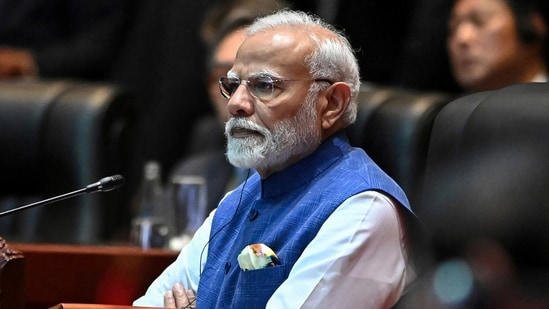
We know the solid political bond between two globally recognized personalities, former U.S. President Donald Trump and Indian Prime Minister Narendra Modi. Their friendship has become a focal point in international relations, with both leaders consistently praising each other in public forums. Recently, Trump expressed his admiration for Modi during an episode of the Flagrant podcast, describing him as his “friend” and the “nicest human being” while also labelling him a “total killer.”

Trump highlighted the significant transformation India has undergone under Modi’s leadership, noting that before Modi took office, the country was “very unstable.” This acknowledgement reflects the global awareness of Modi’s impact on India and its role on the world stage.

Recalling the “Howdy, Modi” event in Houston in September 2019, where around 80,000 people gathered to celebrate Modi’s visit, Trump described the atmosphere as “beautiful” and mentioned the palpable excitement of the crowd during their joint appearance. This event showcased the strong support Modi enjoys not just in India but also among the Indian diaspora in the U.S.

In discussing international relations, Trump shared instances where he offered assistance to Modi in addressing threats to India, alluding to tensions with Pakistan without explicitly naming the country. He quoted Modi’s assertive response: “I will do it, I will do anything necessary. We have defeated them for hundreds of years.” This powerful statement underscores the strong rapport between the two leaders, who continue to influence global political dynamics through their friendship and mutual respect.

माता महागौरी की पूजा – नवदुर्गा की आठवीं शक्ति

0

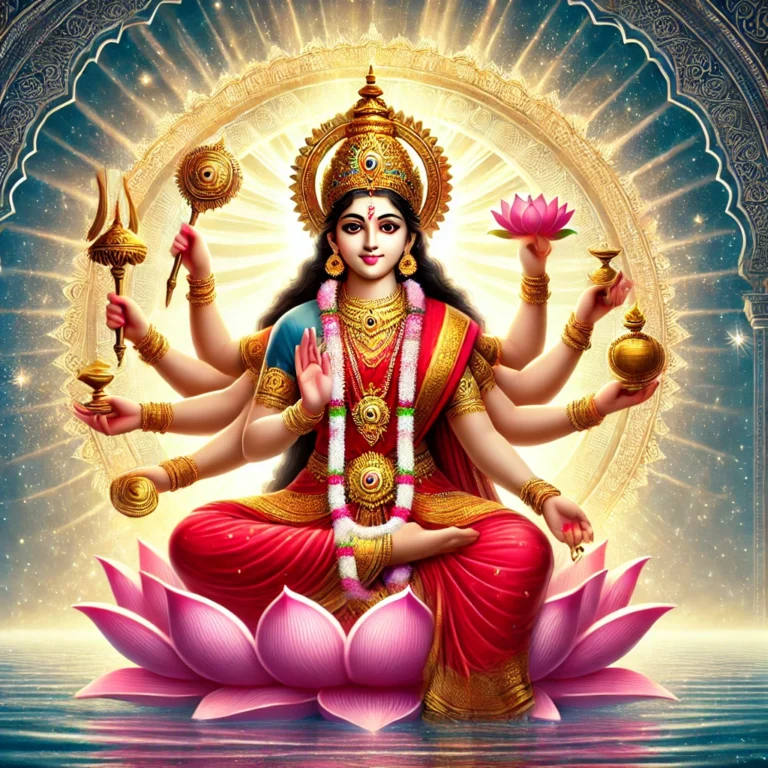
माता महागौरी, देवी दुर्गा के नौ रूपों में से एक हैं। वे शक्ति, शांति और ज्ञान की देवी मानी जाती हैं। माता महागौरी का वर्णन उनके उज्ज्वल सफेद रंग और उनकी दिव्य आभा से किया जाता है। उन्हें अक्सर एक बैल पर सवार देखा जाता है और उनके हाथों में त्रिशूल और ढोल होते हैं। महागौरी का स्वरूप शुद्धता और सामर्थ्य का प्रतीक है, और उन्हें कठिनाइयों को दूर करने वाली देवी माना जाता है।

माता महागौरी की पूजा का महत्व

  1. शुद्धता और मानसिक शांति: माता महागौरी की पूजा से भक्तों को मानसिक शांति और आंतरिक शुद्धता की प्राप्ति होती है। उनके आशीर्वाद से मन में सकारात्मकता और आत्मविश्वास बढ़ता है।
  2. ज्ञान और बुद्धि: महागौरी को ज्ञान और बुद्धि की देवी माना जाता है। उनकी आराधना करने से भक्तों में समझदारी और विवेक का विकास होता है, जो जीवन के निर्णयों में सहायक होता है।
  3. संकटों का नाश: माता महागौरी भक्तों के सभी संकटों और बाधाओं को दूर करती हैं। उनके आशीर्वाद से भक्त जीवन में आने वाली समस्याओं का सामना करने में सक्षम होते हैं।
  4. परिवार में सुख-शांति: माता महागौरी की कृपा से परिवार में सुख-शांति और समृद्धि का वास होता है। वे दांपत्य जीवन को खुशहाल बनाने में मदद करती हैं।

माता महागौरी की पूजा के लाभ

  • सकारात्मक ऊर्जा: पूजा करने से घर में सकारात्मक ऊर्जा का संचार होता है, जिससे सभी सदस्य खुश और स्वस्थ रहते हैं।
  • दुखों का निवारण: भक्तों की सभी चिंताओं और दुखों का निवारण होता है, और उन्हें जीवन में सुख-समृद्धि की प्राप्ति होती है।
  • व्यवसाय में सफलता: माता महागौरी की आराधना से व्यवसाय में सफलता मिलती है, और काम में रुकावटें दूर होती हैं।
  • आध्यात्मिक उन्नति: उनकी पूजा से भक्तों की आध्यात्मिक उन्नति होती है, जिससे वे अपने जीवन के उच्च उद्देश्य को पहचान पाते हैं।

इस प्रकार, माता महागौरी की पूजा से भक्तों को कई प्रकार के लाभ और आशीर्वाद प्राप्त होते हैं, जो उनके जीवन को खुशहाल और समृद्ध बनाते हैं।

The Men Who Built India: From Nasarwanji Tata to Ratan Tata

0

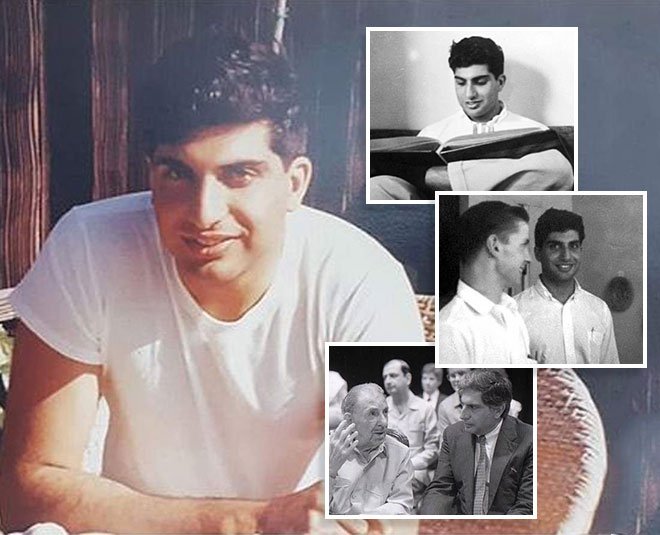
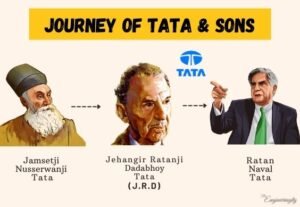
With the passing of Ratan Tata, a chapter closes on one of India’s most iconic and revered figures. His contributions to the Tata Group and his role in shaping India into its modern nation are monumental. Yet, the story of how the Tata Group helped build the nation begins much earlier, with Ratan Tata merely carrying forward a legacy that started over a century ago. From Nusserwanji Tata to J.R.D. Tata, and then to Ratan Tata, the Tata family has played a pivotal role in India’s economic, industrial, and social development. Let’s delve into how this family built a business empire and a foundation for a more robust, self-reliant India.

Nusserwanji Tata: Humble Beginnings, A Visionary Legacy

The story begins with Nusserwanji Tata, a Navsari, Gujarat priest who migrated to Bombay (now Mumbai) for better opportunities. Little did he know that his journey would lay the foundation for one of the world’s most successful and socially responsible business empires. Though his beginnings were modest, Nusserwanji’s values of hard work, integrity, and education set the tone for the following generations.

Jamsetji Tata: The Father of Indian Industry

Nusserwanji’s son, Jamsetji Tata, is often hailed as the father of Indian industry. Born in 1839, Jamsetji had a grand vision for India, far ahead of his time. At a time when India was under British rule and its industries were shackled by colonial policies, Jamsetji envisioned an industrially self-sufficient nation.

He founded Tata & Sons in 1868 and embarked on a journey to transform India’s industrial landscape. His most significant achievement was the establishment of Tata Steel (then TISCO) in 1907, which would later become Asia’s first steel plant. At the time, India depended heavily on British imports for steel, but Jamsetji’s dream was to make India self-reliant in steel production. Tata Steel became the backbone of India’s infrastructure, contributing to building roads, bridges, and factories that would fuel the country’s growth.

Jamsetji also founded Empress Mills in Nagpur, which revolutionized the textile industry. But his vision was not confined to industry alone; he dreamt of advancing science, education, and infrastructure. His plans for institutions like the Indian Institute of Science (IISc) showed his commitment to building the intellectual capital of India.

Sir Dorabji Tata: Realizing a Dream

Following Jamsetji’s death, his son, Sir Dorabji Tata, carried the legacy forward. Under his leadership, the dream of Tata Steel became a reality, and in 1912, it began production. This marked a crucial moment in India’s industrial history as it gave India its first home-grown steel plant, which would play a crucial role in its infrastructure development.

Sir Dorabji also founded the Tata Hydroelectric Power Company, which powered the industrial city of Bombay and enabled the rise of Indian manufacturing. He was not only focused on business but also philanthropy, founding the Sir Dorabji Tata Trust to support health, education, and rural development. Like many others created by the Tata family, this trust continues to uplift lives across India.
J.R.D. Tata: Soaring into the Skies

The baton was passed to J.R.D. Tata, in 1938, was a visionary leader who would take the Tata Group to unprecedented heights. Jehangir Ratanji Dadabhoy Tata, or J.R.D., was India’s first licensed pilot and founded Tata Airlines in 1932, later becoming Air India, India’s national carrier.

J.R.D.’s leadership saw the diversification of the Tata Group into various sectors, such as automobiles, chemicals, hospitality, and information technology. Under his guidance, Tata Motors and Tata Consultancy Services (TCS) were established, both of which became leaders in their respective fields. Tata Motors revolutionized India’s automobile sector with the production of the Tata Indica and Tata Ace, while TCS became one of the world’s largest IT service companies, placing India at the center of the global digital economy.

J.R.D.’s vision extended beyond industry; he was deeply committed to improving the lives of his employees, introducing welfare measures like profit-sharing and healthcare. His ethical leadership and focus on social responsibility earned him the Bharat Ratna in 1992, India’s highest civilian award.
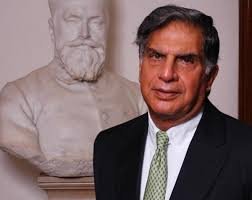
Ratan Tata: Expanding India’s Global Footprint

In 1991, Ratan Tata took over the reins of the Tata Group, just as India opened its doors to global markets through economic liberalization. Under his leadership, Tata Group went through a globalization and strategic expansion phase. His most notable achievements include the acquisition of Tetley in 2000, Corus Steel in 2007, and the luxury car brands Jaguar Land Rover in 2008. These acquisitions expanded the Tata Group’s footprint globally and put India on the world stage as a competitive player.

Ratan Tata was also the visionary behind launching the Tata Nano in 2008, the world’s most affordable car, to make car ownership accessible to India’s lower-income families. Though commercially not as successful, the Nano symbolized Ratan Tata’s deep-rooted desire to bring innovation to the masses.

During his tenure, Tata Group’s revenues soared from $5 billion to over $100 billion, with the majority of income coming from international markets. Despite his massive global success, Ratan Tata remained committed to his principles of corporate social responsibility. The Tata Trusts, under his leadership, continued to fund education, healthcare, and rural development projects across India, ensuring that the wealth generated by the group was shared with the nation.

Building India, Beyond Business

Its unwavering commitment to nation-building sets the Tata Group apart from many other conglomerates. From establishing India’s first steel plant to leading the IT revolution, the Tata Group has been at the forefront of India’s industrial, economic, and social development. Its companies have employed millions of Indians, contributed to the country’s GDP, and established India as a global economic player.

The group’s legacy is not just about profits and businesses but also about giving back to society. The Tata Trusts, Tata Memorial Hospital, and institutions like IISc and Tata Institute of Social Sciences (TISS) have empowered countless individuals through education, healthcare, and research.

The End of an Era, But the Legacy Lives On

With the passing of Ratan Tata, India has lost a visionary business leader and a man who deeply cares for the nation’s progress and welfare. His journey with the Tata Group is a testament to how a family, through successive generations, contributed to India’s industrial growth and social upliftment.

While his death marks the end of a glorious chapter, the Tata Group’s legacy remains immortal. It continues to shape India, fostering economic growth, promoting innovation, and building a future where industry and humanity can thrive.

May his soul rest in peace.

A Nation Mourns: Ratan Tata, Icon of Indian Industry, Passes Away at 86

0

On 9 October 2024, India and the world lost one of its most revered business leaders, Ratan Tata, who passed away at 86. As the former chairman of Tata Sons, his contributions transcended business, leaving a profound impact on the global industry, philanthropy, and social development. His death has led to an outpouring of grief, with tributes flowing in from across the globe.

A Visionary Leader and Builder of Global Giants

Ratan Tata’s leadership from 1991 to 2012 transformed the Tata Group from a predominantly Indian entity into a global powerhouse. Under his stewardship, the company expanded its global footprint, with revenues soaring from $5 billion to nearly $100 billion. His bold acquisitions of international giants such as Tetley, Corus, and Jaguar Land Rover underscored his vision of creating a truly global Indian company.

A Heart for Philanthropy and Social Change

Beyond his business acumen, Tata was renowned for his deep commitment to social causes. Through the Tata Trusts, he championed initiatives in healthcare, education, and rural development, making a lasting difference in countless lives. The launch of the Tata Nano, aimed at providing affordable cars for lower-income families, is a testament to his desire to uplift society.

A Gentle Giant with a Lasting Legacy

Tata’s legacy is one of humility, ethics, and integrity. Prime Minister Narendra Modi, paying tribute to him, called him a “visionary business leader” whose compassion touched lives worldwide. In his reflection, Tata Sons Chairman N Chandrasekaran remembered him as both a mentor and friend who shaped not only the Tata Group but the landscape of Indian industry.

Ratan Tata’s passing marks the end of an era, leaving behind an indelible mark on Indian industry and a world forever changed by his leadership and generosity. His spirit will continue to inspire future generations

“May his soul rest in peace, and God grant him a better place in the afterlife.”

Chief Justice DY Chandrachud Reflects on Legacy Ahead of Retirement in 2024

0

Chief Justice DY Chandrachud, who has served as the Chief Justice of India since November 2022, is set to retire on 10 November 2024. As his tenure comes to a close, Chandrachud has been reflecting on how history will judge his time in office and the legacy he will leave behind for future generations. In a recent speech at the JSW Law School convocation in Bhutan, he expressed concerns about whether he achieved everything he set out to do and how his judgments will be remembered. Despite these uncertainties, Chandrachud finds solace in his dedication to his role, stating that he commits himself to the job daily.

Several landmark rulings, including decisions on electoral bonds, privacy rights, and gender equality, have marked his tenure. Chandrachud presided over cases that expanded civil liberties, such as reinforcing data protection under the right to privacy and playing a key role in decriminalizing adultery. He also spoke about the balance between traditional values and modern democratic ideals, urging students to examine their historical contexts critically. As he prepares to leave the judiciary, Chandrachud’s reflections highlight the complexities of justice and his deep commitment to upholding constitutional freedoms during a transformative time in India’s legal landscape.

AAP to Contest Delhi Elections Independently, Rejects Alliance with Congress

0

The Aam Aadmi Party (AAP) has officially announced its decision to contest the upcoming Delhi Assembly elections independently, dismissing the possibility of allying with the Congress. The announcement comes in the wake of Congress’s underwhelming performance in the recent Haryana elections, where it failed to secure a majority, leaving room for the BJP to retain power for the third consecutive term.

AAP spokesperson Priyanka Kakkar stated that the party is fully prepared to challenge the BJP and Congress without alliances. “AAP is capable of standing alone in the electoral battle, and we will fight both national parties head-on,” she declared, emphasizing AAP’s focus on grassroots engagement and development projects in Delhi ahead of the elections scheduled for early next year.

Kakkar blamed the Congress’s “overconfidence” for their poor showing in Haryana, remarking that AAP’s support during the 2019 Lok Sabha elections—where AAP ceded three seats to Congress—was not reciprocated by forming a stronger alliance in Haryana. “Despite our cooperation, Congress chose to go their way, and it didn’t work out well for them,” Kakkar added.

Highlighting historical context, AAP pointed out that Congress has not won any seats in the Delhi Assembly for the past decade, further solidifying AAP’s stance to go solo. “Congress has been out of the political map of Delhi for years, and our strategy moving forward will focus on development and empowering local workers,” Kakkar noted.

This strategic shift reflects AAP’s growing confidence in its independent strength, critiquing Congress’s past alliances while reaffirming its focus on delivering development-driven governance in Delhi.

  • Independent Contest: AAP confirms it will fight the Delhi elections independently.
  • Blame on Congress: AAP accuses Congress’s “overconfidence” for its poor showing in Haryana.
  • Development Focus: AAP plans to focus on Delhi’s development projects and local engagement.
  • Historical Context: Congress’s decade-long absence from the Delhi Assembly contributes to AAP’s decision.

Dear “Women, It’s Time to Prioritize Your Health: October is Breast Cancer Awareness Month”

1

Good morning Everyone today we talk about a very important topic related to our health October is here, and with it comes Breast Cancer Awareness Month, a time dedicated to raising awareness about one of the most common cancers affecting women worldwide—breast cancer. It’s time we talk about something vital: our health. Ladies, we often put our families, work, and responsibilities first, but this month, let’s prioritise our health.

Why Breast Cancer Awareness Matters

Did you know that 1 in 8 women will develop breast cancer in her lifetime? It’s a staggering statistic. Breast cancer doesn’t discriminate—it can affect anyone, no matter their age, background, or lifestyle. That’s why awareness, early detection, and regular checkups are crucial for all women.

The good news is that early detection saves lives. When breast cancer is detected early, the five-year survival rate can be as high as 90%. Regular mammograms and self-examinations can make all the difference. The earlier we catch it, the better our chances of successful treatment.

Understanding the Risk Factors

While the exact causes of breast cancer are still being studied, there are some known risk factors. 

  • Family history: If breast cancer runs in your family, your risk may be higher.
  • Age: As we age, our risk increases. Most breast cancers are found in women over 50.
  • Lifestyle: Factors like smoking, lack of exercise, and poor diet can contribute to an increased risk.

However, breast cancer can affect anyone, even those without these risk factors. That’s why awareness and regular checkups are so important, no matter your personal situation.

Global and National Impact

Around the world, breast cancer is the most common cancer among women. Countries like the United States, UK, and Australia report high incidence rates, but survival rates are significantly higher due to advanced screening programs and early detection.

In India, the picture is slightly different. While our breast cancer incidence rate is lower than in many Western countries, our mortality rate is high due to late-stage diagnosis and limited access to healthcare in rural areas. Breast cancer has now surpassed cervical cancer as the most common cancer among Indian women, with approximately 25-30 per 100,000 women being affected. Lack of awareness and social stigma often prevent women from seeking help early.

States like Kerala, Tamil Nadu, and Delhi have better breast cancer awareness and healthcare facilities, contributing to lower mortality rates. However, in states like Uttar Pradesh, Bihar, and Madhya Pradesh, there is an urgent need to spread awareness and improve healthcare infrastructure to ensure early detection and treatment.

What You Can Do

1. Self-Examinations: Make it a habit to perform regular self-examinations. This is a simple yet effective way to detect any unusual changes in your breasts, such as lumps, pain, or changes in size or shape. If you notice anything unusual, don’t hesitate to consult a doctor.

2. Regular Checkups: If you’re over 40, make sure you schedule regular mammograms. If you have a family history of breast cancer, talk to your healthcare provider about starting screenings earlier.

3. Healthy Lifestyle: Small changes can make a big difference. Stay active, eat a healthy diet, and try to maintain a healthy weight. Limiting alcohol intake and avoiding smoking are also essential steps in reducing your risk.

4. Spread Awareness: This month, take the opportunity to talk about breast cancer with the women in your life. Whether it’s with friends, family, or colleagues, spreading awareness can save lives.

The Emotional Journey of Breast Cancer

Beyond the physical impact, breast cancer also has an emotional toll. Many women feel overwhelmed by fear, anxiety, and uncertainty. That’s why it’s important to create a support network. Talk to your loved ones, join support groups, or seek counseling if needed. You don’t have to face this alone.

As women, we have so much on our plates, but we must remember that our health is the foundation for everything we do. This October, as we honor Breast Cancer Awareness Month, let’s pledge to take care of ourselves and prioritize our well-being. Early detection saves lives, so let’s make sure we’re doing everything we can to stay healthy and aware.

LIVE LOVE AND LAUGH