Sunday, June 28, 2026
Home Blog Page 42

India’s Inflation Surges to 5.49% in September 2024, Driven by Food Prices

0

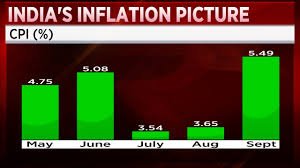
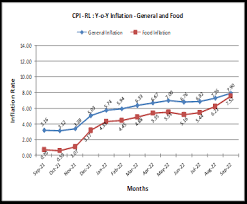
India witnessed a sharp rise in inflation in September 2024, with the annual rate climbing to 5.49%, up from 3.65% in August. This marks the highest inflation rate of the year, surpassing market expectations of around 5% and exceeding the Reserve Bank of India’s (RBI) target of 4%. The price surge, particularly in essential commodities, has raised concerns about the impact on household budgets and potential shifts in monetary policy.

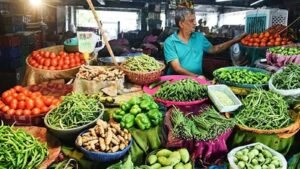
One of the primary factors driving this inflation spike was a sharp increase in food prices, which saw an annual jump of 9.24%. As food makes up nearly half of the consumer price basket in India, this surge had a significant impact on the overall inflation rate. Notable increases were observed in:

  • Vegetables: Prices skyrocketed by 35.99%, marking the most significant contributor to the inflation spike.
  • Pulses and Products: Registered a 9.81% increase, further adding to the inflationary pressure on household staples.
  • Housing Costs: Inflation for housing also saw a moderate rise, reaching 2.78% compared to 2.66% in August.
  • Fuel and Light: While fuel prices continued to decline, the rate of decrease slowed to -1.39%, compared to -5.31% in August, contributing less to counterbalance the food price surge.

Urban vs. Rural Inflation

Inflationary pressures also varied across regions, with rural areas experiencing higher inflation than urban regions.

  • Rural Inflation: Recorded at 5.87%, reflecting stronger price increases in food and other essential goods.
  • Urban Inflation: Lower at 5.05%, indicating different cost pressures and possibly more resilience in urban areas.

Implications for Policy and Households

The sharp rise in inflation is expected to have a significant impact on consumer purchasing power, especially in rural areas where food constitutes a larger share of expenses. With inflation now exceeding the RBI’s target, the central bank may face pressure to reconsider its monetary policy stance, potentially revisiting interest rate decisions to curb inflationary pressures.

This inflation surge highlights ongoing challenges in managing India’s food supply chains, which have been affected by seasonal factors and weather disruptions impacting agricultural output. With the festival season approaching, further inflationary pressure may continue to strain household budgets, prompting both consumers and policymakers to stay vigilant.

2024 Nobel Prize in Economics Awarded to Daron Acemoglu, Simon Johnson, and James A. Robinson for Groundbreaking Research on Institutions and Prosperity

0

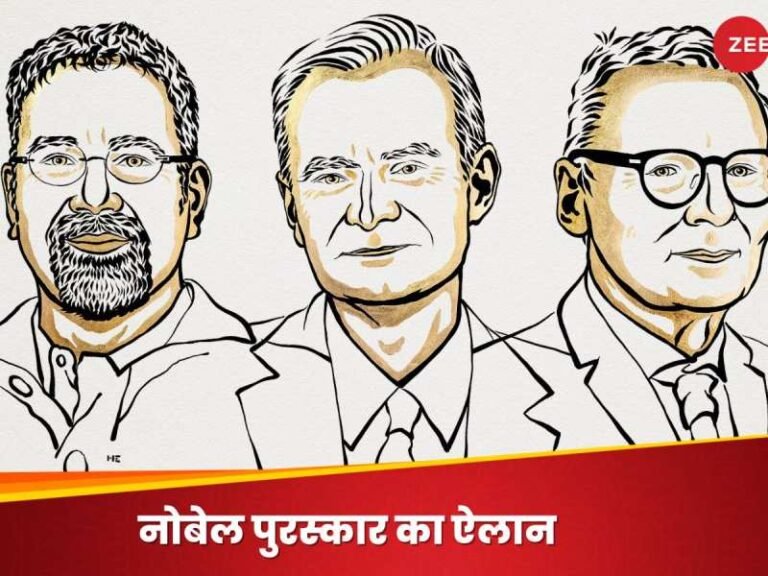
The 2024 Nobel Prize in Economics has been awarded to economists Daron Acemoglu, Simon Johnson, and James A. Robinson for their significant contributions to understanding how societal institutions shape economic prosperity and global inequality. The trio’s research has provided critical insights into why certain nations succeed economically while others remain impoverished, highlighting the crucial role that institutions play in shaping these outcomes.

Pioneering Research on Economic Disparities

The laureates were recognized for their influential studies on the formation of institutions and their direct impact on wealth disparities between nations. Their research emphasizes that inclusive institutions—those which promote democratic governance, protect property rights, and enforce the rule of law—are essential for sustainable economic growth. In contrast, countries with extractive or corrupt systems tend to suffer from stagnation and widespread inequality.

Through in-depth analysis, including their famous comparison of Nogales, Arizona, and Nogales, Sonora—two cities separated by the U.S.-Mexico border but vastly different in economic development—their work demonstrates how institutional differences, not geography, can lead to divergent outcomes for neighboring regions.

Insights Into Global Economic Development

Acemoglu and Johnson, who are both affiliated with the Massachusetts Institute of Technology (MIT), and Robinson, a professor at the University of Chicago, have reshaped the understanding of how institutions drive the wealth of nations. Their studies have broad implications for policymakers and governments, stressing that building and maintaining inclusive, transparent, and accountable institutions is key to fostering economic development.

The Nobel committee praised their work for providing a comprehensive explanation of why some societies prosper while others remain mired in poverty, underscoring the importance of governance that prioritizes equality, inclusion, and opportunity for all citizens.

Closing the 2024 Nobel Prize Season

This year’s Nobel Prize in Economics concludes the 2024 Nobel Prize season, which also recognized trailblazers in medicine, literature, and other fields. Established in 1968 by Sweden’s central bank in memory of Alfred Nobel, the Nobel Prize in Economics continues to spotlight significant contributions to the understanding and improvement of the global economy.

As the world grapples with widening economic inequality, the work of Acemoglu, Johnson, and Robinson serves as a timely reminder of the power institutions hold in determining the prosperity—or failure—of nations.

मोहन भागवत का विजयादशमी भाषण: बांग्लादेश की चिंता, भारत की खामोशी पर सवाल

0

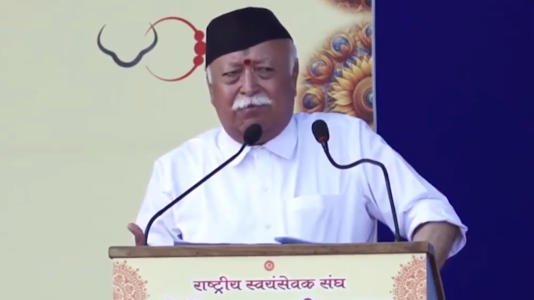
जैसे ही राष्ट्रीय स्वयंसेवक संघ (RSS) अपने 100वें वर्ष में प्रवेश करता है, संगठन के प्रमुख मोहन भागवत का विजयादशमी भाषण बड़ी उत्सुकता से प्रतीक्षित था। लेकिन यह न तो कार्यकर्ताओं को प्रेरित कर सका और न ही आम जनता को उत्साहित कर पाया। हिंदुओं की एकता के आह्वान और ‘डीप स्टेट’, ‘वोकिज़्म’ और ‘सांस्कृतिक मार्क्सवाद’ जैसे खतरों की चेतावनी में कुछ भी नया नहीं था। भागवत का वार्षिक दशहरा भाषण आमतौर पर RSS के दृष्टिकोण और भविष्य की दिशा पर प्रकाश डालता है, और इसके माध्यम से यह भी आकलन किया जाता है कि देश की सत्ता में बैठी भारतीय जनता पार्टी (BJP) किस दिशा में आगे बढ़ेगी।

अपने भाषण में भागवत ने पड़ोसी देश बांग्लादेश में हिंदुओं पर हुए हमलों का जिक्र किया, खासकर शेख हसीना सरकार के हटने के बाद। उन्होंने बांग्लादेश के हिंदुओं की प्रशंसा की, जिन्होंने हमलों के खिलाफ एकजुट होकर विरोध किया। साथ ही, उन्होंने विश्वभर के हिंदुओं से अपील की कि वे बांग्लादेश में हो रहे अल्पसंख्यक समुदाय के खिलाफ अत्याचारों के खिलाफ आवाज उठाएं।

हालांकि, यह विडंबना है कि भागवत ने भारत में अल्पसंख्यकों, खासकर मुस्लिमों, पर हो रहे अत्याचारों पर भाजपा सरकार की आलोचना नहीं की। गाय संरक्षण के नाम पर मुसलमानों पर बार-बार हो रहे हमले और लिंचिंग की घटनाओं पर उन्होंने कोई प्रतिक्रिया नहीं दी। विपक्ष ने तुरंत पलटवार करते हुए पूछा कि RSS प्रमुख भाजपा का समर्थन क्यों कर रहे हैं, जो लगातार सांप्रदायिक ध्रुवीकरण के प्रयासों से देश में असंतोष फैला रही है।

Reliance Jio Challenges Elon Musk’s Starlink in India’s Satellite Internet Race

0

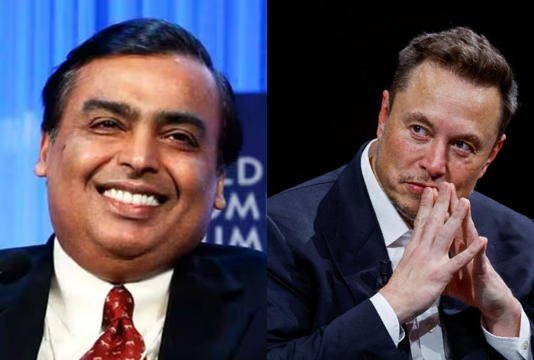
In a bold move that could significantly alter India’s satellite internet landscape, Mukesh Ambani’s Reliance Jio is setting its sights on becoming a key player in the space, directly challenging Elon Musk’s Starlink. By introducing strategic initiatives and pushing for regulatory changes, Jio aims to revolutionize satellite internet services in India, positioning itself as a formidable competitor to international tech giants like Starlink and Amazon’s Kuiper project.

Jio’s Satellite Internet Ambitions

Jio’s entry into the satellite internet sector signals a calculated effort to provide affordable, high-quality internet access, particularly in rural and underserved regions of India. With millions of Indians still without reliable internet, Jio sees a vast untapped market that satellite internet can reach more efficiently than traditional infrastructure.

But Jio isn’t stopping at just entering the market—it’s also calling for a major change in how satellite spectrum is allocated in India. The company has urged the Indian government to introduce an auction system for satellite spectrum, similar to how telecom spectrum rights are awarded. This proposal, if implemented, could create a regulatory framework that not only integrates satellite and telecom networks but also ensures a level playing field for all players, including international ones like Starlink.

Starlink Faces New Hurdles

For Elon Musk’s Starlink, Jio’s push for a structured auction process presents a significant challenge. Starlink, which has been operating without the constraints of spectrum auctions in India, now faces the possibility of navigating a more regulated environment. Jio argues that international companies should not be allowed to dominate the Indian market without adhering to local regulations, advocating for stricter oversight to ensure fair competition.

Additionally, Jio’s well-established telecom infrastructure and expansive customer base give it a strong advantage. With the ability to bundle satellite internet services with its existing offerings, Jio is poised to offer more reliable and affordable services compared to Starlink, which has faced criticism for latency and consistency issues. This competitive edge could make Jio a more attractive option for consumers across India.

The Battle for India’s Satellite Internet Market

As the competition heats up, the outcome of Jio’s proposal and its satellite internet venture could reshape the industry. If Jio successfully navigates the regulatory landscape and secures the satellite spectrum through auctions, it will not only challenge Starlink but potentially reshape pricing strategies and service quality across the market.

For Starlink, India is a key market in its global expansion, and the rise of a powerful local competitor like Jio represents a significant hurdle. As Reliance Jio continues to innovate and expand, the battle for dominance in India’s satellite internet space is set to intensify, with major implications for the future of connectivity in the country.

Murder of Baba Siddique Intensifies Threats Against Salman Khan: Lawrence Bishnoi Gang’s Vendetta Escalates

0

In a shocking incident that has once again cast a spotlight on the notorious Lawrence Bishnoi gang, Baba Siddique, a prominent politician and close associate of Bollywood superstar Salman Khan, was gunned down outside his Mumbai office on October 12, 2024. The murder, which the Bishnoi gang has claimed responsibility for, marks a chilling escalation in its violent feud with Khan, raising alarms about further targeted attacks.

A Deadly Vendetta

Lawrence Bishnoi, currently imprisoned in Gujarat’s Sabarmati jail, harbors a deep-seated grudge against Salman Khan, stemming from the actor’s involvement in the 1998 blackbuck poaching case. The Bishnoi community, to which Bishnoi belongs, considers the blackbuck sacred. Khan’s acquittal in the case has fueled Bishnoi’s personal vendetta, and since 2018, he has issued multiple threats against the actor. During one court appearance, Bishnoi infamously vowed, “Salman Khan will be killed here in Jodhpur,” a statement that has echoed ominously over the years.

In recent months, the National Investigation Agency (NIA) uncovered documents that reveal Bishnoi’s continued fixation on Salman Khan. The actor tops a hit list compiled by the gang leader, with reports indicating that reconnaissance was carried out around Khan’s Mumbai residence earlier this year. Though security forces foiled this assassination attempt, a subsequent shooting incident at Khan’s home in April 2024 underscored the very real danger looming over him.

The Murder of Baba Siddique: A Grim Signal

Baba Siddique’s assassination, however, is more than just another violent crime. As a close friend of Khan, Siddique’s murder sends a chilling message, hinting at the Bishnoi gang’s willingness to strike not only at their primary target but also at those associated with him. The brazen attack outside Siddique’s office is seen as both a revenge killing and a warning—one that has already prompted heightened security around Khan.

With his death, the focus shifts to Siddique’s son, Zeeshan Siddique, who is reportedly also a target due to his ties with Khan. Investigators believe the gunmen who murdered Baba Siddique may have been plotting to kill his son as well, further exposing the reach of the gang’s operations.

The Bishnoi Gang’s Hit List

The assassination of Baba Siddique is just the latest move in a broader pattern of violence orchestrated by Lawrence Bishnoi and his associates. The gang has compiled a hit list targeting several high-profile figures across India, connected either by personal vendettas or rivalries within the criminal underworld. Some of the key names on Bishnoi’s hit list include:

  • Salman Khan: The Bollywood superstar remains Bishnoi’s primary target due to his involvement in the 1998 blackbuck poaching case. The Bishnoi community holds the blackbuck sacred, and Khan’s actions have fueled Bishnoi’s wrath for years. Khan has faced multiple threats, with one attempt on his life thwarted earlier this year.
  • Shaganpreet Singh: Former manager of the late Punjabi singer Sidhu Moose Wala, Shaganpreet is targeted by Bishnoi for allegedly providing refuge to the killers of Vicky Middukhera, a close associate of Bishnoi who was murdered in 2021.
  • Munawar Faruqui: The comedian and winner of Bigg Boss 17 is on the hit list due to Bishnoi’s belief that Faruqui disrespected the gang’s associates. Intelligence agencies recently foiled an attempt to target Faruqui during an event in Delhi.
  • Zeeshan Siddique: The son of Baba Siddique is reportedly under threat following his father’s assassination, as the gang seeks to target those in close association with Salman Khan.
  • Kaushal Chaudhary: A gangster affiliated with the rival Bambiha gang, Chaudhary is accused of providing weapons to the killers of Bishnoi’s associate Vicky Middukhera. He has been marked for elimination.
  • Amit Dagar: Another gangster who played a role in Vicky Middukhera’s murder, Dagar is currently incarcerated but remains a target due to his links to rival criminal factions.
  • Mandeep Dhariwal: An associate of absconding gangster Gaurav Padial, Dhariwal had been involved in activities against Bishnoi’s network. Dhariwal was killed in the Philippines in a suspected gang-linked operation.

Rising Stakes

For many, the murder of Baba Siddique serves as a grim reminder of the escalating violence that has come to define the Lawrence Bishnoi gang’s operations. What began as a vendetta over a decades-old wildlife case has morphed into a broad criminal enterprise capable of carrying out targeted killings, instilling fear not only in their targets but also in their communities.

As investigations into Siddique’s assassination unfold, the connection between the Bishnoi gang, political figures, and the entertainment industry is expected to deepen. What remains clear is that Salman Khan, a towering figure in Bollywood, remains at the heart of Bishnoi’s wrath, with every new development raising the stakes of this dangerous feud.

For now, security forces are on high alert, working to prevent further bloodshed. However, with a growing list of high-profile targets and an emboldened criminal network, the specter of violence continues to hang heavy over Mumbai.

Jaishankar’s Landmark Visit to Pakistan for SCO Summit Sparks Diplomatic Buzz

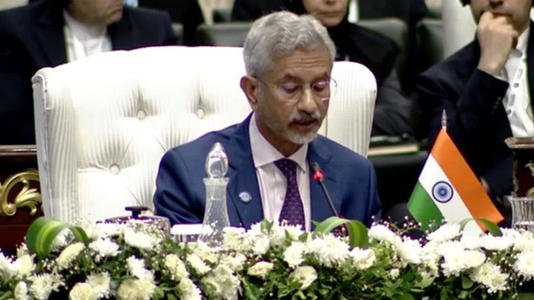
In a move that has stirred diplomatic circles across the globe, Indian External Affairs Minister S. Jaishankar touched down in Islamabad on October 15, 2024, for the highly anticipated Shanghai Cooperation Organization (SCO) Summit. This is no ordinary visit—it marks the first high-level trip from India to Pakistan in nearly a decade, a moment charged with both history and the weight of unresolved tensions between the two nations. With Kashmir, terrorism, and cross-border relations still casting long shadows over their interactions, Jaishankar’s presence on Pakistani soil is already creating ripples.

As India and Pakistan step cautiously onto the global stage once again, the stakes are high. Both countries have ruled out any direct talks, but with the eyes of the world fixed on Islamabad, Jaishankar’s brief but symbolic visit may hint at more than just participation in a regional meeting. Could this rare encounter signal a shift in the frostiness of India-Pakistan relations, or will it remain a strictly diplomatic formality?

For now, the focus remains squarely on the SCO. However, the significance of Jaishankar’s visit, even within the confines of the multilateral summit, signals that while diplomatic frost may remain, the door to dialogue is not entirely shut.

“Diwali Delight: Chennai Firm Rewards Employees with 28 Cars, Including Luxurious Mercedes!”

0

Chennai – In a heartwarming gesture that has captured headlines, Chennai-based Team Detailing Solutions has gifted 28 cars, including luxury models from renowned brands like Mercedes-Benz, to its employees as part of its Diwali celebrations. Valued at approximately Rs 3.5 crore, this initiative aims to recognize the hard work and dedication of staff, especially those who have been with the company for several years.

The vehicles presented during a private celebration for Ayudha Pooja, a festival dedicated to honoring tools and work, showcased a variety of models, including popular choices from Hyundai, Maruti Suzuki, and Tata Motors. Among the cars were the Toyota Innova, Hyundai Creta, i20, and Maruti Ertiga, highlighting the company’s commitment to celebrating its employees’ loyalty.

Eligibility for the car gifts was based on tenure, with employees who have served over nine years receiving cars, while those with more than seven years were awarded scooters. This thoughtful approach underlines the company’s dedication to rewarding long-term commitment and outstanding performance.

Founded in 2005, Team Detailing Solutions has seen remarkable growth, expanding from just four employees to around 180. Many of the company’s workers come from modest backgrounds, making this gesture particularly impactful as it seeks to uplift their standard of living. Managing Director Sridhar Kannan emphasized that these gifts are not arbitrary but rather a reflection of employees’ exceptional performance and loyalty to the company.

In addition to the vehicle gifts, Team Detailing Solutions also offers financial assistance for weddings, with this year’s marriage incentive increased from Rs 50,000 to Rs 1 lakh, further demonstrating its commitment to employee welfare.

Kannan expressed that such initiatives are not just about the gifts but play a crucial role in fostering a positive workplace culture where employees feel valued and motivated. He noted, “These gestures are integral to maintaining high levels of productivity and employee satisfaction within the company.”

As the festival of lights brings joy and celebration, Team Detailing Solutions has illuminated the lives of its employees, reinforcing the belief that a supportive workplace can significantly enhance the well-being and morale of its workforce.

“Ageless Ambition: Meet the 96-Year-Old Cyclist Who Proves It’s Never Too Late”

0

At the remarkable age of 96, Jack Eckenrode stands as a beacon of inspiration, showcasing that age is merely a number when embarking on a fitness journey. Surprisingly, Jack only took up cycling after he turned 75, but his commitment to health and wellness began much earlier.

After retiring as an insurance salesman at 60, Jack chose not to rest. Instead, he embraced a life of hard work on a farm, where he dedicated 15 years to the rhythms of rural life. It was a hands-on existence that kept him physically active, but when he sold the farm at 75, he found himself at the brink of a new adventure—cycling.

Now residing in Pittsburgh, Jack shares his insights on fitness, emphasizing that it’s never too late to prioritize health. “Exercising is a daily commitment for me,” he told Business Insider, underscoring how he carves out an hour each day to stay active—a luxury he could not afford while raising his 12 children.

Recent research supports Jack’s approach. A 2023 study published in Preventive Medicine revealed that even individuals aged 80 and above can significantly extend their lives through physical activity, regardless of past inactivity. This resonates with Jack’s philosophy, as he enthusiastically commits to his fitness routine.

His regimen includes 30 minutes on a stationary bike followed by 30 minutes of calisthenics, a routine he learned during his time as a pilot in the US Air Force. This full-body workout keeps him strong and capable, enabling him to enjoy daily cycling on local trails. His dedication has led him to compete in the National Senior Games for the past two decades, where he has participated in four cycling races and sprint events, collecting five medals last year, including a notable win in the 20-kilometer cycle race.

“My legs never get sore, and my muscles or back never get sore. I can go on forever,” Jack beams, embodying a spirit of resilience that inspires those around him.

Jack’s Top Tips for Fitness at Any Age

  1. Make Exercise a Daily Habit:
    “I go out of my way to get on that stationary bike for sure. I try not to miss one day. I feel so much better after I do it,” he emphasizes. For Jack, dedicating just one hour a day is a small price to pay for the health benefits it provides. He encourages everyone to remain active—whether through golf, tennis, or simply taking a walk outside. “The more you do that, the happier you’ll be.”

    A physiologist specializing in healthy aging notes that just 3% of your day spent exercising—around 30 minutes—can lead to significant longevity benefits and help prevent chronic diseases like type 2 diabetes and cancer.

  2. Exercise with Others:
    When the weather allows, Jack loves to cycle with his nearby children, a tradition he cherished with his late wife. “We always biked early in the morning and even late at night,” he recalls fondly. Research shows that having a workout buddy can enhance motivation, a sentiment echoed by younger generations who blend socializing with fitness in running clubs and gym sessions.
  3. Multitask while exercising:
    Jack also integrates mindfulness into his workouts. “I try to meditate on the stationary bike to start things off, and then I plan my day while biking,” he shares. This approach not only makes exercise enjoyable but also helps him stay organized and feel positive. Music plays a vital role in his routine; he enjoys tunes selected by Alexa, which enhances his workout experience. Studies have shown that exercising to music can improve performance, and combining physical activity with mindfulness can bolster psychological health by alleviating symptoms of depression, anxiety, and stress.

Jack Eckenrode’s journey is a testament to resilience, commitment, and the belief that fitness knows no age. As he continues to pedal through life with vigor, he inspires countless others to embrace an active lifestyle, proving that it’s never too late to start anew.

Understanding Migraines: A Global and Indian Perspective on Health Impacts

0

Migraines are a debilitating health condition characterized by severe throbbing pain, typically on one side of the head. This neurological disorder affects millions worldwide, with a higher prevalence among females and varying impacts across different regions and demographics. Recent data highlights the need for a comprehensive understanding of migraines, their causes, symptoms, diagnosis, and treatment options.

Globally, migraines affect approximately 14% of the population, equivalent to over 1 billion people. According to the Global Burden of Disease Study (2019), the prevalence of migraines is about 16% in women and 6% in men. The World Health Organization (WHO) reports that migraines are among the top 20 causes of years lived with disability (YLDs), emphasizing their significant impact on quality of life. A study published in The Lancet Neurology estimates that migraines account for approximately 1.5% of global disability-adjusted life years (DALYs) lost.

India’s Migraine Burden

In India, the prevalence of migraines varies significantly across states. A survey conducted by the Indian Headache Society revealed that nearly 43 million people suffer from migraines, with the highest rates reported in urban areas. For instance, a study from Delhi found that around 36% of adults experience migraines, with similar findings in other states like Maharashtra (32%) and Karnataka (30%).

  • Demographics: Women are more prone to migraines than men, with a ratio of about 3:1. Research indicates that 29% of women aged 18-44 report experiencing migraines compared to 11% of men.
  • Age: The most affected age group is 18-35 years, often coinciding with higher stress levels and lifestyle changes. A study found that 54% of migraine sufferers in this age group reported work-related stress as a trigger.
  • Cultural Factors: Certain cultural practices and dietary habits may exacerbate migraine symptoms, particularly in regions with traditional food practices. For example, spicy foods and fermented products are known triggers for many individuals in India.

Symptoms and Stages of Migraines

  1. Prodrome: Warning signs such as mood changes, food cravings, and increased thirst. Approximately 60% of individuals report experiencing prodromal symptoms before a migraine attack.
  2. Aura: Neurological symptoms like visual disturbances and changes in sensation occur in about 25% of migraine patients.
  3. Headache: The pain phase, lasting between four and 72 hours, characterized by throbbing pain, sensitivity to light and sound, and nausea. In India, around 80% of migraine sufferers report nausea during an attack.
  4. Post-drome: Symptoms following the headache, including confusion, fatigue, and sensitivity to stimuli, affecting nearly 80% of patients.

Diagnosis and Treatment

Diagnosing migraines typically involves a thorough assessment of symptoms and imaging tests such as MRI and CT scans to rule out other conditions. According to a survey, nearly 50% of patients in India report receiving a migraine diagnosis from a general practitioner rather than a headache specialist, leading to potential underdiagnosis and undertreatment.

In India, treatment options vary, with common approaches including:

  • Medications: Pain relievers (NSAIDs), triptans, and preventive medications like beta-blockers and antidepressants. Data indicates that nearly 60% of patients use over-the-counter pain relief medications during an attack.
  • Lifestyle Changes: Regular exercise, adequate hydration, and avoiding known triggers (certain foods, alcohol, and stress). A study found that 40% of respondents reported significant improvements by implementing lifestyle changes.

Comparative Insights: India vs. Other Countries

While the treatment protocols for migraines are similar globally, accessibility to healthcare and awareness levels differ significantly. In countries like the USA and Canada, patients often have better access to specialized headache clinics and migraine management programs. For example, in the USA, about 60% of migraine sufferers have consulted a healthcare professional for their condition, compared to just 30% in India.

Cultural factors in India, such as dietary habits and stress levels due to urbanization, can influence migraine prevalence and management. Research shows that 70% of Indian migraine patients report stress as a significant trigger, compared to 40% in Western countries.

Migraines are a significant health concern affecting millions of people globally, particularly in India. Understanding the multifaceted nature of this condition—its causes, symptoms, diagnosis, and treatment—can help individuals better manage their health. With increasing awareness and research, there’s hope for improved migraine care and support across diverse populations, ultimately enhancing the quality of life for those affected.

As awareness of migraines continues to grow, it is crucial for individuals to recognize the symptoms early and seek appropriate medical advice. Additionally, healthcare systems must work towards improving access to specialized care, ensuring that both urban and rural populations receive the necessary support to manage migraines effectively.

In the Wake of Baba Siddique’s Tragic Death, Calls Intensify for Salman Khan’s Apology Over Blackbuck Incident

0

The tragic murder of Baba Siddique has reignited tensions surrounding Bollywood star Salman Khan, as BJP MP Harnath Singh Yadav has urged the actor to issue a public apology to the Bishnoi community for the blackbuck poaching incident that took place over two decades ago. The demand comes at a time of heightened unrest, with Siddique, a close friend of Khan, allegedly murdered by the Lawrence Bishnoi gang—a group that has long harbored animosity toward the actor.

A Painful History

The roots of the controversy trace back to 1998, when Khan was convicted for hunting a blackbuck, an animal considered sacred by the Bishnoi community, during the filming of “Hum Saath-Saath Hain” in Rajasthan. The case sparked outrage within the Bishnoi community, which views the blackbuck as a symbol of reverence and protection. Even after years, the wound has not healed, and resentment toward Khan still lingers.

MP’s Appeal:

In light of these ongoing tensions, Yadav took to X (formerly Twitter) to address the issue. His message urged Khan to make amends, stating, “People make mistakes, but my good advice to you is that you should respect the sentiments of the Bishnoi community and apologize to them for your big mistake.” The appeal, made in a public forum, underscores the lingering emotions tied to the 1998 incident and the cultural values of the Bishnoi people, who feel their beliefs were deeply disrespected.

The Shadow of Violence:

Yadav’s call for an apology gains added weight in the wake of Baba Siddique’s murder. Siddique, a prominent politician and Khan’s close friend, was allegedly killed by members of the Lawrence Bishnoi gang—a group that has repeatedly targeted Khan, threatening his safety over his role in the Blackbuck poaching case. The gang’s open claim of responsibility for Siddique’s murder has cast a fresh pall over Khan’s life, with concerns growing about further potential threats.

Cultural Grievances and Celebrity Accountability:

Yadav’s appeal reflects a larger sentiment within the Bishnoi community. The call for an apology is not just about a decades-old incident but about a clash of cultural values—between a revered community symbol and the actions of a public figure. The blackbuck remains sacred, and the demand for accountability from a celebrity like Khan represents the community’s enduring need for justice and respect.

The tragic events surrounding Baba Siddique’s death have only intensified these longstanding tensions, underscoring how historical grievances continue to shape relationships between local communities and public figures.