Sunday, March 8, 2026
Home Blog Page 41

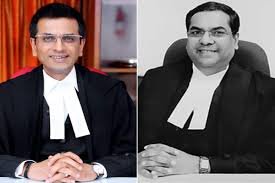
Chief Justice D.Y. Chandrachud Recommends Justice Sanjiv Khanna as Successor

0

In a significant development for the Indian judiciary, Chief Justice of India (CJI) D.Y. Chandrachud has officially recommended Justice Sanjiv Khanna as his successor. This announcement comes as CJI Chandrachud prepares for his retirement on November 10, 2024. Pending government approval, Justice Khanna is set to become the 51st Chief Justice of India, with a tenure expected to last six months, concluding on May 13, 2025.

Background on Justice Sanjiv Khanna

Justice Sanjiv Khanna, currently the second-most senior judge of the Supreme Court, has had a distinguished legal career. He began his journey in 1983 after enrolling with the Bar Council of Delhi. Initially practicing at the Tis Hazari district courts, he quickly advanced to the Delhi High Court and various tribunals. His judicial career took a significant turn when he was appointed as an additional judge of the Delhi High Court in 2005 and became a permanent judge in 2006. Justice Khanna was elevated to the Supreme Court on January 18, 2019.

Throughout his career, Justice Khanna has been involved in several high-profile cases that have shaped Indian law. He is known for his emphasis on balancing freedom of speech with personal liberty, notably in a ruling concerning a journalist’s comments during a television show. Justice Khanna also played a crucial role in upholding the abrogation of Article 370, which revoked Jammu and Kashmir’s special status, and in striking down the electoral bonds scheme for infringing on the public’s right to information.

CJI Chandrachud’s Tenure

CJI Chandrachud has served as the head of the judiciary since November 9, 2022. His tenure has been marked by landmark judgments, including those related to same-sex marriage and the revocation of Jammu and Kashmir’s special status. The recommendation of Justice Khanna follows the established convention where the retiring Chief Justice nominates their successor, reflecting a tradition that emphasizes continuity and stability within the Supreme Court.

As the Indian judiciary prepares for this transition, Justice Khanna’s extensive legal experience and commitment to upholding constitutional values will be critical in addressing the complex challenges ahead. The legal community and citizens alike will be watching closely as the government considers this recommendation.


Pro-Khalistani Leader Gurpatwant Singh Pannun Admits Contact with Canadian Prime Minister Justin Trudeau Amid Rising India-Canada Tensions

0

Pro-Khalistani leader Gurpatwant Singh Pannun has admitted to having contact with Canadian Prime Minister Justin Trudeau, adding a new layer of complexity to the already tense relations between India and Canada. This revelation comes after Canada accused Indian agents of being involved in the June 2023 assassination of pro-Khalistani activist Hardeep Singh Nijjar, which India has strongly denied as baseless and politically motivated. The diplomatic fallout has seen both countries expelling diplomats, further straining ties. Pannun’s acknowledgment highlights the growing influence of pro-Khalistani sentiments within Canadian politics, driven by the country’s large Sikh diaspora. This development raises concerns about how diaspora politics is shaping Canada’s foreign policy toward India, complicating diplomatic efforts amid the ongoing crisis.

Nikita Porwal Crowned Femina Miss India 2024 in Mumbai

0

Nikita Porwal from Madhya Pradesh has been crowned Femina Miss India 2024 in a grand ceremony held in Mumbai on October 16, 2024, marking the 60th edition of the prestigious beauty pageant.

Highlights of the Pageant

  • Crowning Moment: Nikita was crowned by Nandini Gupta, the Femina Miss India World 2023 titleholder, with actress Neha Dhupia placing the iconic Miss India sash on her.
  • Runners-Up: Rekha Pandayy from the Union Territories secured the first runner-up position, while Ayushi Dholakia from Gujarat was named the second runner-up.

Nikita Porwal’s Journey

  • Hometown: Nikita hails from Ujjain, Madhya Pradesh.
  • Education: She completed her schooling at Carmel Convent Senior Secondary School and is currently pursuing her higher studies at Maharaja Sayajirao University of Baroda.
  • Career: Starting out as a TV anchor at 18, Nikita has an extensive background in theatre, performing in over 60 plays and even penning a 250-page play titled Krishna Leela. She is also set to appear in a feature film that has already gained attention at international festivals.

Future Aspirations

With her new title, Nikita Porwal will represent India at Miss World 2024, joining the ranks of former Indian titleholders like Aishwarya Rai and Priyanka Chopra. Nikita expressed her admiration for Aishwarya Rai Bachchan, praising her elegance and intellect as her source of inspiration.

The event, filled with celebrity appearances and performances, celebrated a significant milestone in Indian beauty pageantry.

Rohit Sharma Announces India’s Playing XI for First Test Against New Zealand, Key Changes Revealed

0

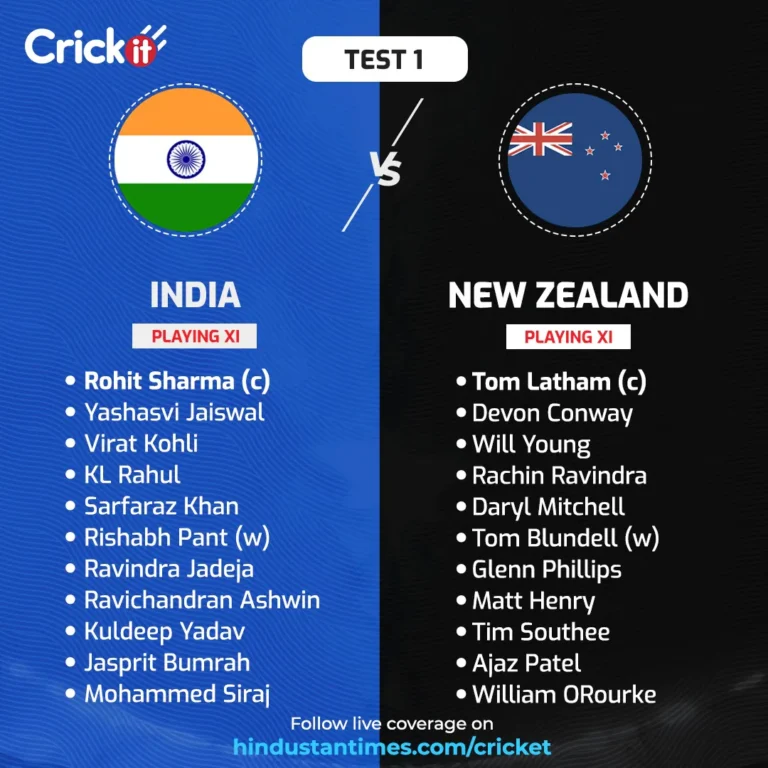
India’s captain Rohit Sharma made headlines with the announcement of the playing XI for the first Test against New Zealand, revealing some notable changes to the lineup.

Key Changes in the Playing XI

  1. Shubman Gill Omitted: Star batter Shubman Gill has been left out due to neck stiffness, with Rohit confirming that Gill was not “100 percent fit” for the match. This decision highlights the team’s emphasis on player health over immediate selection.
  2. Sarfaraz Khan’s Inclusion: Replacing Gill, Sarfaraz Khan has been given a chance in the XI. The young batsman, who has been in stellar form in domestic cricket, will be looking to make the most of this opportunity.
  3. Kuldeep Yadav Replaces Akash Deep: Left-arm spinner Kuldeep Yadav has been brought into the lineup in place of pacer Akash Deep as India opts for a spin-heavy attack on a pitch that is expected to favor spinners.

India’s Playing XI

The final lineup for the Test match is as follows:

  • Rohit Sharma (C)
  • Yashasvi Jaiswal
  • KL Rahul
  • Virat Kohli
  • Sarfaraz Khan
  • Rishabh Pant (WK)
  • Ravindra Jadeja
  • Ravichandran Ashwin
  • Kuldeep Yadav
  • Jasprit Bumrah
  • Mohammed Siraj

Match Context

The match is being played at the M. Chinnaswamy Stadium in Bengaluru, where rain delayed the start on the first day. The toss took place on the second day, with India opting to bat first under slightly challenging conditions.

India’s selection reflects a strategic approach, balancing player fitness and pitch conditions for the crucial Test.

India-Pakistan Relations at SCO Summit: Hopes for Dialogue Amid Persistent Challenges

0

Pakistan’s Foreign Ministry spokesperson, Mumtaz Zahra Baloch, has expressed optimism that India will take meaningful steps toward fostering peace and dialogue in the region, particularly in light of the ongoing Shanghai Cooperation Organization (SCO) summit. This comes as Indian External Affairs Minister S. Jaishankar visits Pakistan to attend the SCO Council of Heads of Government meeting, marking the first visit by an Indian foreign minister to Pakistan in nearly a decade.

Pakistan’s Focus at the SCO Summit

As the current chair of the SCO, Pakistan has outlined key priorities for the summit, with an emphasis on:

  1. Economic Development: The agenda focuses on strengthening economic cooperation among member states, addressing pressing global issues like climate change and disruptions in supply chains.
  2. Cultural Connectivity: Enhancing cultural ties between SCO members is another major goal for Pakistan, seeking to bridge cultural divides for better regional understanding.
  3. Climate Change: Baloch stressed the need for a collective response to climate challenges, which disproportionately affect developing countries, including many within the SCO.

The summit’s final declaration is expected to reflect a consensus on economic development and collaborative efforts to address these shared challenges.

Jaishankar’s Firm Stance

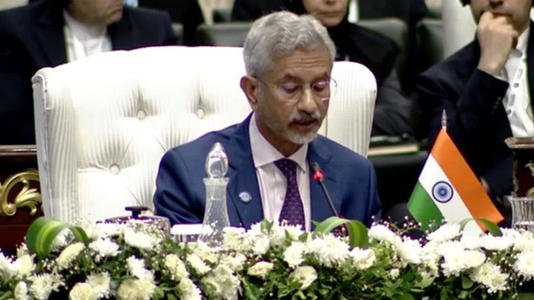
During his address at the summit, External Affairs Minister S. Jaishankar reiterated India’s longstanding position on the need for an environment free of terrorism for any meaningful dialogue with Pakistan. He emphasized that “terror and talks cannot go hand-in-hand,” underscoring that peace and stability are prerequisites for development and regional cooperation. His comments reflect India’s concern over terrorism, which remains a core issue in its relations with Pakistan.

Jaishankar also pointed out the importance of addressing terrorism, separatism, and extremism, aligning with the SCO’s broader mission to combat these “three evils.”

Prospects for Bilateral Talks

Although Jaishankar’s visit is primarily centered on the SCO summit, informal discussions with Pakistan’s Deputy Prime Minister Ishaq Dar touched on potential cricketing ties between the two nations. While this conversation signals a possible opening for future dialogue, both sides acknowledge that significant progress in relations will require careful negotiation, given their troubled history.

Jaishankar Calls Out Cross-Border Terrorism at SCO Summit, Urges Peace and Cooperation

0

Islamabad, October 16, 2024 – External Affairs Minister S. Jaishankar delivered a clear and strong message at the Shanghai Cooperation Organisation (SCO) summit, held in Islamabad today, emphasizing the detrimental impact of cross-border terrorism on regional cooperation and development. While not directly naming Pakistan, his remarks appeared to address the longstanding issue of terrorism emanating from its soil, a persistent point of tension between India and Pakistan.

Terrorism Undermines Trade and Growth

Jaishankar’s address highlighted the importance of good neighborly relations for fostering trade, energy flows, and regional connectivity. He stated, “If cross-border activities are characterized by terrorism, they will inevitably hinder these aspects of cooperation.” He stressed that development and growth require a stable and peaceful environment, and cross-border terrorism is a direct threat to such stability.

He further emphasized the need for mutual respect and trust between nations. “Cooperation must be built on the foundation of mutual respect, and territorial integrity must be recognized,” Jaishankar said, urging SCO member states to reflect on why trust may be lacking in certain bilateral relationships.

SCO’s Role in Combating Extremism

Reiterating the SCO’s mandate, Jaishankar highlighted the organization’s focus on fighting terrorism, extremism, and separatism—issues that are becoming even more significant in the face of contemporary global challenges. The Indian minister called for stronger collective efforts in tackling these problems, stressing that sustainable development can only take place in a secure and peaceful environment.

A Summit Amidst Broader Global Challenges

Jaishankar’s comments also touched on global conflicts and crises, such as climate change and economic instability, noting that genuine partnerships between nations are essential for addressing these issues. He urged countries to move beyond unilateral agendas and work collaboratively to find solutions to shared challenges.

This summit marks a milestone, as it is the first time a senior Indian official has visited Pakistan in nearly a decade. However, no formal bilateral talks between India and Pakistan are scheduled during the event.

As tensions over terrorism continue to loom large over Indo-Pak relations, Jaishankar’s remarks highlight India’s firm stance on the issue, making it clear that peace, trust, and mutual respect are essential for any meaningful cooperation in the region.

India’s Inflation Surges to 5.49% in September 2024, Driven by Food Prices

0

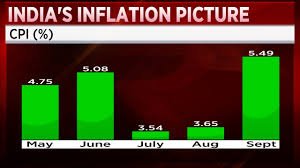
India witnessed a sharp rise in inflation in September 2024, with the annual rate climbing to 5.49%, up from 3.65% in August. This marks the highest inflation rate of the year, surpassing market expectations of around 5% and exceeding the Reserve Bank of India’s (RBI) target of 4%. The price surge, particularly in essential commodities, has raised concerns about the impact on household budgets and potential shifts in monetary policy.

One of the primary factors driving this inflation spike was a sharp increase in food prices, which saw an annual jump of 9.24%. As food makes up nearly half of the consumer price basket in India, this surge had a significant impact on the overall inflation rate. Notable increases were observed in:

  • Vegetables: Prices skyrocketed by 35.99%, marking the most significant contributor to the inflation spike.
  • Pulses and Products: Registered a 9.81% increase, further adding to the inflationary pressure on household staples.
  • Housing Costs: Inflation for housing also saw a moderate rise, reaching 2.78% compared to 2.66% in August.
  • Fuel and Light: While fuel prices continued to decline, the rate of decrease slowed to -1.39%, compared to -5.31% in August, contributing less to counterbalance the food price surge.

Urban vs. Rural Inflation

Inflationary pressures also varied across regions, with rural areas experiencing higher inflation than urban regions.

  • Rural Inflation: Recorded at 5.87%, reflecting stronger price increases in food and other essential goods.
  • Urban Inflation: Lower at 5.05%, indicating different cost pressures and possibly more resilience in urban areas.

Implications for Policy and Households

The sharp rise in inflation is expected to have a significant impact on consumer purchasing power, especially in rural areas where food constitutes a larger share of expenses. With inflation now exceeding the RBI’s target, the central bank may face pressure to reconsider its monetary policy stance, potentially revisiting interest rate decisions to curb inflationary pressures.

This inflation surge highlights ongoing challenges in managing India’s food supply chains, which have been affected by seasonal factors and weather disruptions impacting agricultural output. With the festival season approaching, further inflationary pressure may continue to strain household budgets, prompting both consumers and policymakers to stay vigilant.

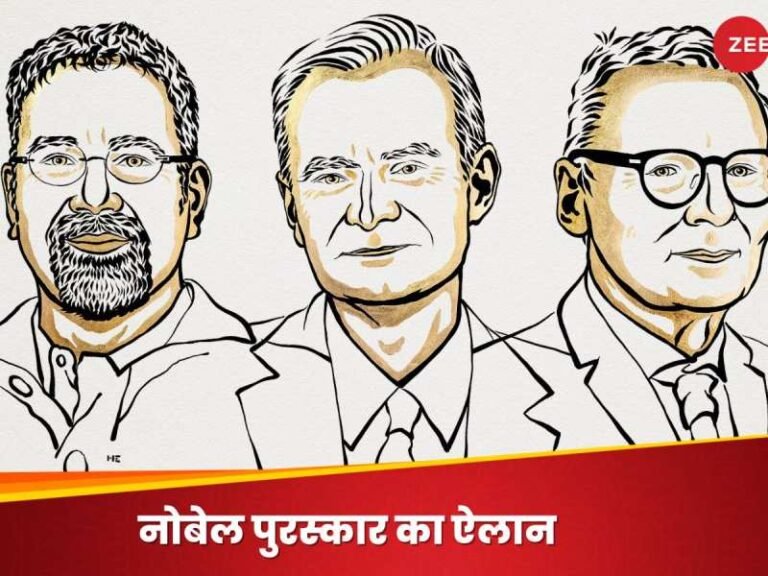
2024 Nobel Prize in Economics Awarded to Daron Acemoglu, Simon Johnson, and James A. Robinson for Groundbreaking Research on Institutions and Prosperity

0

The 2024 Nobel Prize in Economics has been awarded to economists Daron Acemoglu, Simon Johnson, and James A. Robinson for their significant contributions to understanding how societal institutions shape economic prosperity and global inequality. The trio’s research has provided critical insights into why certain nations succeed economically while others remain impoverished, highlighting the crucial role that institutions play in shaping these outcomes.

Pioneering Research on Economic Disparities

The laureates were recognized for their influential studies on the formation of institutions and their direct impact on wealth disparities between nations. Their research emphasizes that inclusive institutions—those which promote democratic governance, protect property rights, and enforce the rule of law—are essential for sustainable economic growth. In contrast, countries with extractive or corrupt systems tend to suffer from stagnation and widespread inequality.

Through in-depth analysis, including their famous comparison of Nogales, Arizona, and Nogales, Sonora—two cities separated by the U.S.-Mexico border but vastly different in economic development—their work demonstrates how institutional differences, not geography, can lead to divergent outcomes for neighboring regions.

Insights Into Global Economic Development

Acemoglu and Johnson, who are both affiliated with the Massachusetts Institute of Technology (MIT), and Robinson, a professor at the University of Chicago, have reshaped the understanding of how institutions drive the wealth of nations. Their studies have broad implications for policymakers and governments, stressing that building and maintaining inclusive, transparent, and accountable institutions is key to fostering economic development.

The Nobel committee praised their work for providing a comprehensive explanation of why some societies prosper while others remain mired in poverty, underscoring the importance of governance that prioritizes equality, inclusion, and opportunity for all citizens.

Closing the 2024 Nobel Prize Season

This year’s Nobel Prize in Economics concludes the 2024 Nobel Prize season, which also recognized trailblazers in medicine, literature, and other fields. Established in 1968 by Sweden’s central bank in memory of Alfred Nobel, the Nobel Prize in Economics continues to spotlight significant contributions to the understanding and improvement of the global economy.

As the world grapples with widening economic inequality, the work of Acemoglu, Johnson, and Robinson serves as a timely reminder of the power institutions hold in determining the prosperity—or failure—of nations.

मोहन भागवत का विजयादशमी भाषण: बांग्लादेश की चिंता, भारत की खामोशी पर सवाल

0

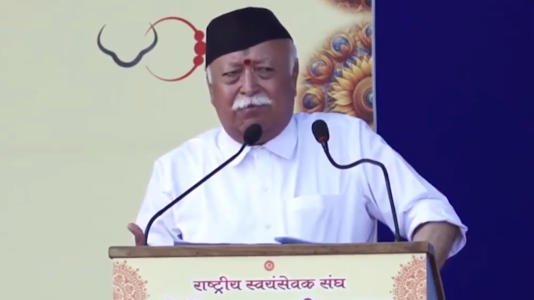
जैसे ही राष्ट्रीय स्वयंसेवक संघ (RSS) अपने 100वें वर्ष में प्रवेश करता है, संगठन के प्रमुख मोहन भागवत का विजयादशमी भाषण बड़ी उत्सुकता से प्रतीक्षित था। लेकिन यह न तो कार्यकर्ताओं को प्रेरित कर सका और न ही आम जनता को उत्साहित कर पाया। हिंदुओं की एकता के आह्वान और ‘डीप स्टेट’, ‘वोकिज़्म’ और ‘सांस्कृतिक मार्क्सवाद’ जैसे खतरों की चेतावनी में कुछ भी नया नहीं था। भागवत का वार्षिक दशहरा भाषण आमतौर पर RSS के दृष्टिकोण और भविष्य की दिशा पर प्रकाश डालता है, और इसके माध्यम से यह भी आकलन किया जाता है कि देश की सत्ता में बैठी भारतीय जनता पार्टी (BJP) किस दिशा में आगे बढ़ेगी।

अपने भाषण में भागवत ने पड़ोसी देश बांग्लादेश में हिंदुओं पर हुए हमलों का जिक्र किया, खासकर शेख हसीना सरकार के हटने के बाद। उन्होंने बांग्लादेश के हिंदुओं की प्रशंसा की, जिन्होंने हमलों के खिलाफ एकजुट होकर विरोध किया। साथ ही, उन्होंने विश्वभर के हिंदुओं से अपील की कि वे बांग्लादेश में हो रहे अल्पसंख्यक समुदाय के खिलाफ अत्याचारों के खिलाफ आवाज उठाएं।

हालांकि, यह विडंबना है कि भागवत ने भारत में अल्पसंख्यकों, खासकर मुस्लिमों, पर हो रहे अत्याचारों पर भाजपा सरकार की आलोचना नहीं की। गाय संरक्षण के नाम पर मुसलमानों पर बार-बार हो रहे हमले और लिंचिंग की घटनाओं पर उन्होंने कोई प्रतिक्रिया नहीं दी। विपक्ष ने तुरंत पलटवार करते हुए पूछा कि RSS प्रमुख भाजपा का समर्थन क्यों कर रहे हैं, जो लगातार सांप्रदायिक ध्रुवीकरण के प्रयासों से देश में असंतोष फैला रही है।

Reliance Jio Challenges Elon Musk’s Starlink in India’s Satellite Internet Race

0

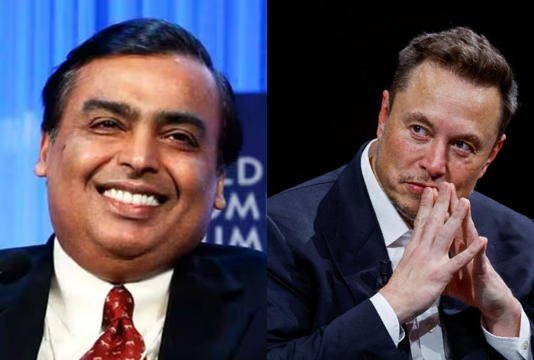
In a bold move that could significantly alter India’s satellite internet landscape, Mukesh Ambani’s Reliance Jio is setting its sights on becoming a key player in the space, directly challenging Elon Musk’s Starlink. By introducing strategic initiatives and pushing for regulatory changes, Jio aims to revolutionize satellite internet services in India, positioning itself as a formidable competitor to international tech giants like Starlink and Amazon’s Kuiper project.

Jio’s Satellite Internet Ambitions

Jio’s entry into the satellite internet sector signals a calculated effort to provide affordable, high-quality internet access, particularly in rural and underserved regions of India. With millions of Indians still without reliable internet, Jio sees a vast untapped market that satellite internet can reach more efficiently than traditional infrastructure.

But Jio isn’t stopping at just entering the market—it’s also calling for a major change in how satellite spectrum is allocated in India. The company has urged the Indian government to introduce an auction system for satellite spectrum, similar to how telecom spectrum rights are awarded. This proposal, if implemented, could create a regulatory framework that not only integrates satellite and telecom networks but also ensures a level playing field for all players, including international ones like Starlink.

Starlink Faces New Hurdles

For Elon Musk’s Starlink, Jio’s push for a structured auction process presents a significant challenge. Starlink, which has been operating without the constraints of spectrum auctions in India, now faces the possibility of navigating a more regulated environment. Jio argues that international companies should not be allowed to dominate the Indian market without adhering to local regulations, advocating for stricter oversight to ensure fair competition.

Additionally, Jio’s well-established telecom infrastructure and expansive customer base give it a strong advantage. With the ability to bundle satellite internet services with its existing offerings, Jio is poised to offer more reliable and affordable services compared to Starlink, which has faced criticism for latency and consistency issues. This competitive edge could make Jio a more attractive option for consumers across India.

The Battle for India’s Satellite Internet Market

As the competition heats up, the outcome of Jio’s proposal and its satellite internet venture could reshape the industry. If Jio successfully navigates the regulatory landscape and secures the satellite spectrum through auctions, it will not only challenge Starlink but potentially reshape pricing strategies and service quality across the market.

For Starlink, India is a key market in its global expansion, and the rise of a powerful local competitor like Jio represents a significant hurdle. As Reliance Jio continues to innovate and expand, the battle for dominance in India’s satellite internet space is set to intensify, with major implications for the future of connectivity in the country.