
Wednesday, August 26, 2026
Home Blog Page 24

Could Delhi to San Francisco in 40 Minutes Become Reality? SpaceX’s Starship Brings Hope for Ultra-Fast Travel

0

Imagine boarding a vehicle in Delhi and arriving in San Francisco in just 40 minutes. Once a sci-fi fantasy, this vision is becoming more plausible thanks to rapid advancements in space travel technology, particularly through Elon Musk’s SpaceX and its ambitious Starship program.

Starship’s Role in High-Speed Earth Travel

SpaceX’s Starship, currently under development, is a fully reusable spacecraft designed to carry both crew and cargo on long-duration flights to destinations like Mars. However, one of Starship’s most intriguing potential applications is not just interplanetary—it’s intercontinental. Musk and his team envision Starship enabling ultra-fast Earth-to-Earth travel, which could cut travel times between distant cities to a fraction of today’s.

The Speed Factor

Starship’s speed is key to realizing this concept. Designed to reach velocities over 17,500 miles per hour (28,000 kilometers per hour), the Starship could theoretically complete suborbital flights that dramatically reduce travel times. This would allow passengers to travel between major global cities, such as Delhi and San Francisco, in under an hour.

Promising Test Flights

Recent Starship test flights have shown encouraging progress. These flights, aimed primarily at proving orbital capability, have achieved successful launches and landings. For instance, in a recent test, the Starship was launched and landed in the Indian Ocean approximately 40 minutes after takeoff, offering a tantalizing glimpse into the possibility of future rapid global travel. Though current tests are primarily focused on space missions, they hint at how the technology could one day be adapted for Earth-based travel.

Elon Musk’s Vision for Global Transport

Elon Musk has long advocated for using advanced space travel technology to revolutionize terrestrial transport. While the primary goal for Starship remains space exploration, with missions planned to the Moon and Mars, Musk is confident that the spacecraft’s potential can extend to the way we move on Earth. The plan is to make intercontinental travel not just quicker but potentially more efficient and accessible.

Political Backing and Funding

The future of projects like Starship could be influenced by political developments. Shifts in political leadership, especially in the U.S., have historically impacted funding and regulatory support for space programs. If SpaceX continues to operate in a favorable policy environment, it could accelerate its progress, bringing ultra-fast travel closer to reality.

The Future of Global Travel

While traveling from Delhi to San Francisco in under an hour remains a vision for now, ongoing tests and technological progress suggest it may be achievable. If SpaceX’s development continues at this pace, the dream of ultra-fast global travel could shift from speculative fiction to a tangible reality, reshaping the way we think about distance and travel in the near future.

Living with Diabetes: Celebrity Stories of Resilience, Health Management, and Lifestyle Transformation

0

Diabetes, a condition impacting millions worldwide, is more than just a battle with blood sugar levels—it’s a journey of constant vigilance, lifestyle adjustments, and resilience. For many, it starts with the sudden realization that life, once manageable, now needs a careful balance.

Consider Maheep Kapoor, recently diagnosed with type 1 diabetes. In the face of this challenge, she shifted her focus to meal timing, composition, and regular exercise. Her approach, as she says, is not to let the disease control her life, but to actively manage it. She knows that each day requires awareness of her body’s needs, and a conscious choice to prioritize health.

Nick Jonas, who learned he had type 1 diabetes at age 13, has spent years developing a routine that accommodates his diagnosis. Living with diabetes as a teenager was daunting, but he soon learned the importance of a structured lifestyle—timed meals, regular blood sugar checks, and even planned family time. His journey reminds others that diabetes management is possible, even with a demanding career.

For some, like actor and commentator Gaurav Kapur, the key to control lies in daily habits. Living with diabetes for over a decade, he prioritizes rest, regular exercise, and a balanced diet. Yet one factor he found surprisingly impactful is stress—his blood sugar fluctuates with his stress levels, making emotional well-being as critical as physical health.

For others, the path involves medication and professional guidance. Fawad Khan, diagnosed with type 2 diabetes, manages his condition through regular consultations with a nutritionist and a disciplined approach to diet and exercise. He combines medication with lifestyle changes to keep his insulin sensitivity in check.

Some, like Tom Hanks, have to make hard lifestyle changes to curb the onset of type 2 diabetes. Hanks adjusted his diet and incorporated more physical activity, using his diagnosis as motivation to make healthier choices.

Selena Gomez, facing both lupus and diabetes, highlights the emotional toll of chronic illness. She underscores how intertwined mental and physical health are in managing conditions like diabetes, reminding people that emotional strength is as necessary as physical care.

And then there’s Drew Carey, who found that lifestyle transformation—adopting a healthier diet and increasing physical activity—not only helped him manage diabetes but also brought significant weight loss and overall health improvements.

Diabetes is a complex and challenging illness that goes beyond physical symptoms; it requires a commitment to balance and understanding one’s body. Through their stories, these celebrities illuminate the path to managing diabetes, demonstrating that while it’s a demanding journey, it’s also one that can be managed with resilience and informed choices. They show that diabetes, while formidable, can become a powerful motivation for healthier, more intentional living.

Kanhaiya Kumar Criticizes Amruta Fadnavis, Sparks Controversy Ahead of Maharashtra Elections

0

Congress leader Kanhaiya Kumar ignited controversy at a rally in Nagpur with remarks directed at Amruta Fadnavis, wife of Maharashtra Deputy Chief Minister Devendra Fadnavis. Kumar questioned Fadnavis’s advocacy of “Dharamyudh” (religious war) and implied that it is contradictory for leaders to talk about protecting religion while their family members engage in lighter activities, such as creating Instagram reels. “It can’t be like we save religion and the Deputy Chief Minister’s wife makes reels on Instagram,” Kumar said.

The BJP quickly condemned Kumar’s comments, accusing him of disrespecting Amruta Fadnavis and attempting to shift focus from pressing issues in the state. This exchange underscores the escalating tensions and sharp rhetoric between political rivals as Maharashtra prepares for its upcoming assembly elections.

Amit Shah Rules Out Restoration of Article 370, Criticizes Muslim Reservations and Opposition Alliance in Maharashtra Rally

0

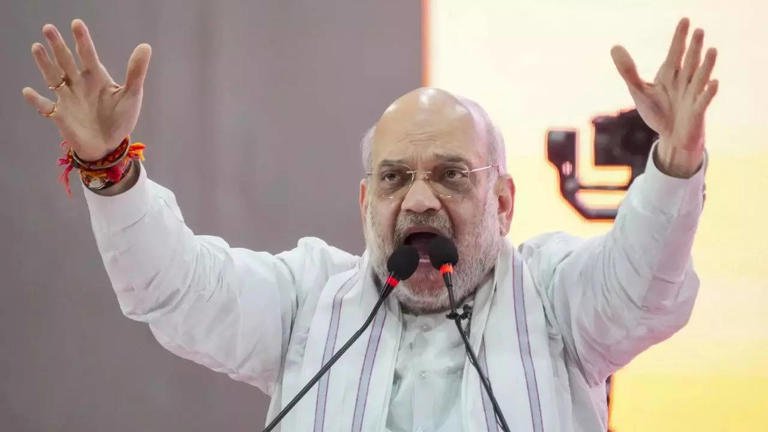
Union Home Minister Amit Shah made a decisive statement at a rally in Maharashtra on November 13, 2024, reaffirming that Article 370—which previously granted special status to Jammu and Kashmir—will never be reinstated. Shah’s comment, asserting that the provision would remain defunct “even if former Prime Minister Indira Gandhi were to return from heaven,” underscores the BJP’s unwavering stance on the abrogation of Article 370, which the Modi government revoked in 2019.

Shah also tackled the issue of Muslim reservations in jobs and education, pointedly addressing Congress leader Rahul Gandhi. He remarked that “even if Gandhi’s fourth generation comes into power,” the BJP would not support reserving SC, ST, and OBC seats for Muslims, as it would reduce the existing quotas for these communities—a measure he firmly opposes.

The remarks came as part of the BJP’s campaign ahead of the Maharashtra Assembly elections. Shah criticized the opposition coalition, the Maha Vikas Aghadi (MVA), calling it an “Aurangzeb fan club” and accusing its leaders of compromising on core principles for political advantage. He expressed confidence in a decisive BJP-led alliance victory in the upcoming elections, projecting his party as the only one standing firm on issues of national unity and reservation policy.

Tulsi Gabbard Appointed as Director of National Intelligence, Marking Historic First for Hindu American Representation

0

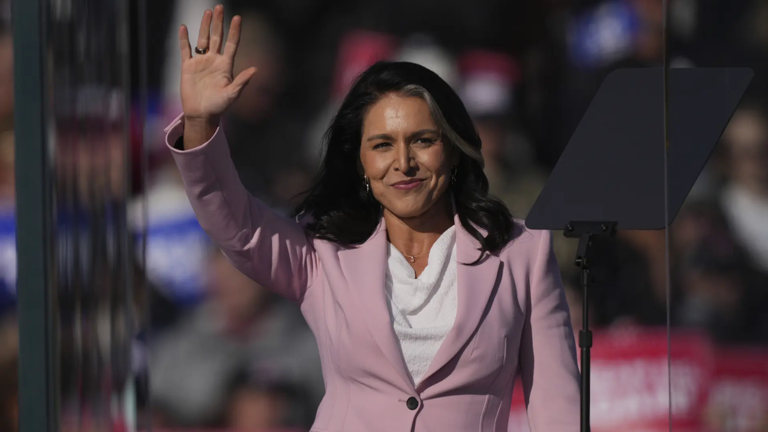
November 14, 2024 – Tulsi Gabbard, a prominent American politician and military veteran, has been appointed by President-elect Donald Trump as the Director of National Intelligence (DNI). This position places her at the head of the U.S. intelligence community, overseeing 18 agencies and serving as the president’s principal advisor on intelligence matters. Gabbard’s appointment is historic, making her the first Hindu American to hold this influential role.

Born on April 12, 1981, in American Samoa and raised in Hawaii, Gabbard has a diverse background with a Samoan father and a mother of European descent who converted to Hinduism. Her upbringing immersed her in Hindu teachings, and her identification with Hinduism has been a notable aspect of her public life, including her decision to take her oath of office on the Bhagavad Gita when first elected to Congress.

Political Career

Gabbard launched her political career at just 21, serving in Hawaii’s House of Representatives before becoming the U.S. Congresswoman for Hawaii’s 2nd district from 2013 to 2021. She was the first Hindu and the first American Samoan to be elected to the U.S. Congress. Known for her strong views on foreign policy, she has been a vocal critic of U.S. military interventions overseas.

In 2020, Gabbard ran for the Democratic presidential nomination but ultimately endorsed Joe Biden after suspending her campaign. By 2022, she announced her departure from the Democratic Party, citing ideological shifts within the party, and soon aligned with the Republicans, endorsing Trump in subsequent political races.

Gabbard’s military background includes more than two decades with the Army National Guard. She served in Iraq and Kuwait, earning a Combat Medical Badge for her work in combat zones. Her military experience has deeply influenced her views on U.S. foreign policy and national defense.

Trump announced Gabbard’s appointment on November 14, commending her “fearless spirit” and bipartisan appeal. Although Gabbard lacks direct experience in intelligence, her military service and distinctive political journey have led to her selection. Gabbard has expressed gratitude for the appointment, highlighting her dedication to strengthening national security under Trump’s administration.

Gabbard’s role as DNI not only underscores her individual achievements but also reflects the evolving dynamics within American politics, especially in terms of party affiliations and foreign policy approaches.

The Race for Jharkhand: Voters Head to Polls in First Phase of Assembly Elections

0

Jharkhand came alive with energy as the first phase of the 2024 Assembly elections kicked off, with voters in 43 constituencies casting their ballots. Early on, lines formed outside polling stations, marking the start of a critical election season that could reshape the state’s political future.

By 11 AM, voter enthusiasm was palpable, with a turnout already surpassing 29%. Polling began promptly at 7 AM and will continue until 5 PM for most booths. At the 950 sensitive polling locations, however, voting will close an hour earlier, with those in line by the cutoff still guaranteed the chance to vote.

For many in the state, the stakes feel particularly high. A total of 683 candidates are competing in this phase, and among them are some of Jharkhand’s most prominent political figures, including former Chief Minister Champai Soren. The race spans a diverse array of constituencies, covering both general and reserved seats for Scheduled Castes and Scheduled Tribes.

Ensuring a smooth and safe voting process has been a priority. With over 200 companies of security forces stationed across the state, and additional protocols in place for sensitive polling sites, authorities are leaving no room for disruption.

On the political front, this election is vital for key parties, especially the BJP, Congress, and the ruling Jharkhand Mukti Morcha (JMM). The JMM, which leads a coalition government, has been campaigning with promises aimed at securing a broader support base. These include pledges for job reservations for women and new welfare schemes. It’s clear that parties are keenly aware of the shifting voter sentiments and are vying to capture the trust of the people.

Looking ahead, the second phase of voting is set for November 20, with the final outcome to be announced on November 23. Until then, Jharkhand will be on the edge, watching each phase unfold as the battle for control continues.

PM Modi Lays Foundation for AIIMS in Darbhanga: A Major Boost to Bihar’s Healthcare Infrastructure

0

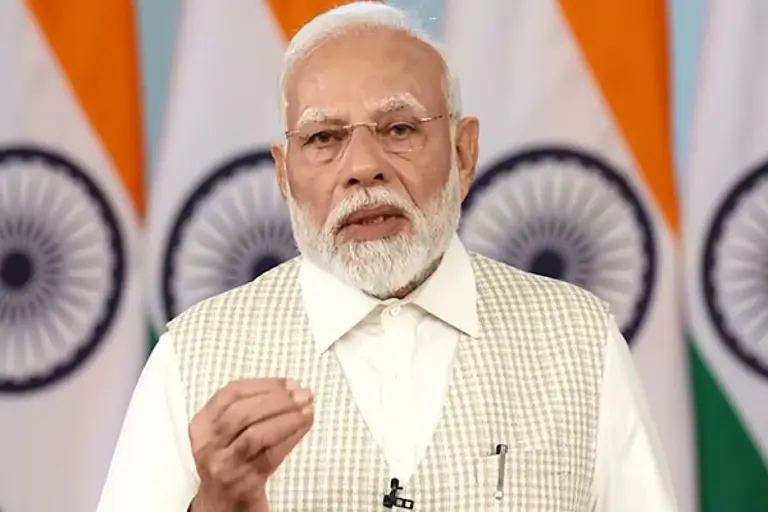
Prime Minister Narendra Modi laid the foundation stone for a new All India Institute of Medical Sciences (AIIMS) in Darbhanga, Bihar, on November 13, 2024. This initiative is part of the government’s broader push to strengthen healthcare services across India, promising to significantly enhance medical facilities for residents in Bihar and patients from neighboring regions like West Bengal and Nepal.

Key Announcements and Highlights

  • Investment in Healthcare: Modi announced developmental projects valued at approximately Rs 12,100 crore aimed at expanding healthcare accessibility across the country. The new AIIMS facility in Darbhanga will be central to this mission, offering advanced healthcare services that will serve not only local communities but also neighboring areas such as Mithila, Kosi, and Tirhut.
  • Economic and Job Growth: The AIIMS project is expected to generate numerous job opportunities, giving a boost to the local economy. In his address, Modi emphasized that this institute would directly benefit regions in Bihar that have historically faced challenges in accessing quality healthcare.
  • Holistic Approach to Healthcare: Modi highlighted his government’s commitment to a comprehensive healthcare strategy focused on disease prevention, accurate diagnosis, affordable treatment, and expanded healthcare in smaller towns. He pointed out the shortcomings of previous administrations in addressing healthcare needs for the underprivileged and stressed the improvements achieved under his leadership.
  • Expansion of Medical Education: Modi noted that the number of medical colleges has doubled in the past decade under his administration, adding thousands of medical seats to the healthcare education system. This expansion is seen as essential to building a stronger, more skilled healthcare workforce for the future.

AIIMS Darbhanga: A Step Toward Decentralized Healthcare

The establishment of AIIMS in Darbhanga marks a pivotal move toward decentralizing advanced medical care, which has historically been concentrated in metropolitan areas. By offering state-of-the-art healthcare facilities in Bihar, the government aims to reduce the burden on patients who previously had to travel long distances for specialized treatment.

Prime Minister Modi’s initiative to bring AIIMS to Darbhanga underscores a commitment to strengthening healthcare infrastructure in Bihar. Through strategic investments, the government aims to transform health outcomes in the region, making quality healthcare more accessible and affordable. This project is not only expected to uplift Bihar’s healthcare landscape but also reflects a national push towards more equitable health services across India.

The 150-Second Walking Workout: A Quick Fix for Busy Schedules

0

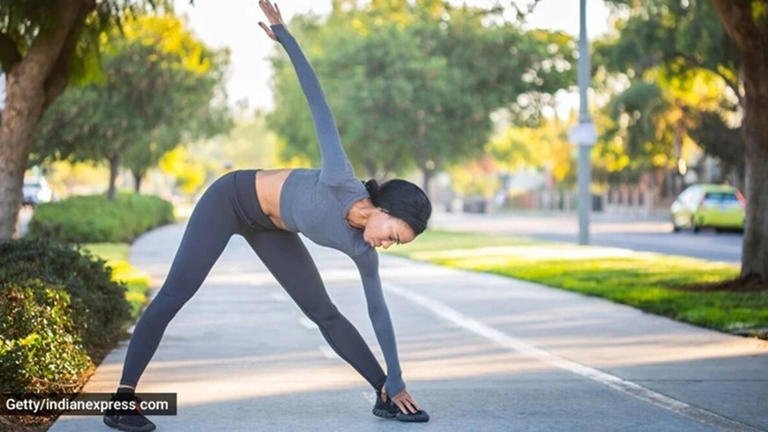
With many people struggling to find time for exercise, a new fitness routine — the 150-second walking workout — is making waves as an accessible way to stay active. Designed to suit people with sedentary lifestyles or packed schedules, this quick workout offers a calorie burn and a physical boost without requiring lengthy sessions at the gym.

Created by yoga trainer and naturopathy expert Dr. Janani Subburaj, the workout consists of five exercises, each performed for 30 seconds, totaling just 2.5 minutes. Here’s the lineup:

  1. March-Past: Engages the core and improves posture.
  2. Jumping Jacks: Boosts circulation.
  3. High Knees: Activates the hip flexors.
  4. Butt Kicks: Works the glutes and hamstrings.
  5. Opposite Toe Touches: Enhances coordination and balance.

Repeating this sequence 10 times can yield around 4,000 to 5,000 steps, an achievable way to hit step goals indoors.

Benefits of the 150-Second Workout

This micro-workout appeals for a few reasons:

  • Time-Efficiency: At just 2.5 minutes per set, it easily slots into a busy day, making it especially useful for those who spend much of their day seated.
  • Activity Boost: It adds movement to otherwise inactive routines and is a handy indoor alternative during inclement weather.
  • Calorie Burn: Short but intense, the workout can contribute to calorie burning over time, especially when done consistently.

While the workout is praised for its convenience, experts suggest that it should be viewed as a supplement to more comprehensive fitness routines. Physiotherapist Dr. Rajaram M. notes that while such brief sessions encourage activity, they do not replace full workouts aimed at building strength and endurance. The World Health Organization recommends 150 minutes of moderate-intensity physical activity per week, underscoring that this routine is best paired with longer workouts to achieve optimal health benefits.

The 150-second walking workout is an effective way to add movement to your day, especially for those with limited time. Ideal for busy individuals and people working from home, it provides a manageable option for adding activity without extensive time commitments. However, for sustained fitness and long-term health, integrating it with more rigorous exercise is key.

Mithun Chakraborty’s Wallet Stolen at BJP Rally in Jharkhand, Later Declared “Misplaced”

0

During a campaign rally in Dhanbad, Jharkhand, on November 12, 2024, actor and BJP leader Mithun Chakraborty experienced a moment of alarm when his wallet was reportedly stolen amid a large, enthusiastic crowd. Chakraborty, who was supporting BJP candidate Aparna Sengupta, found himself in the middle of a chaotic scene as supporters surged forward to catch a glimpse or take a photo. Amidst the commotion and tight security, his wallet was taken, prompting BJP organizers to make public appeals urging anyone who may have taken it to return it.

A video of these appeals quickly circulated on social media, sparking both amusement and debate among users about the state of security at political events. Despite the organizers’ efforts, Chakraborty’s wallet was initially not recovered, leading him to leave the rally sooner than planned.

However, the BJP later clarified that there was no pickpocketing involved, stating instead that the wallet had merely been misplaced and was eventually found. The incident has since raised questions about security protocols at large political gatherings, especially for high-profile figures like Chakraborty.

IndiGo Bids Farewell to Rival Vistara as It Takes Final Flight Before Air India Merger

0

IndiGo has bid an official farewell to its competitor Vistara, which operated its last flight on November 11, 2024, before merging with Air India. In a heartfelt message shared on social media, IndiGo paid tribute to Vistara, calling it an “unforgettable legacy” and expressing admiration despite their years of rivalry. The post included a video commemorating Vistara’s final flight from Goa to Bengaluru, capturing the transition as a new chapter begins under Air India.

The farewell has been met with praise on social media, with many users applauding IndiGo’s gracious acknowledgment of Vistara’s impact on Indian aviation. One comment summed up the sentiment: “When your competitor praises you, that’s when you know – you were DAMN GOOD!” Others shared memories of Vistara’s premium services and outstanding travel experiences, underscoring the airline’s unique contributions to the industry.

Founded in 2015 as a joint venture between Tata Sons and Singapore Airlines, Vistara was known for its premium offerings in the Indian aviation market. The merger with Air India, part of Tata Group’s strategy to consolidate its aviation portfolio, will see Vistara’s fleet and routes integrated into Air India. Post-merger, Singapore Airlines will hold a 25.1% stake in the new entity, establishing Air India as India’s largest international carrier.