Thursday, March 12, 2026
Home Blog Page 23

Kartik Purnima 2024: Celebrating a Day of Spirituality, Charity, and Divine Blessings

0

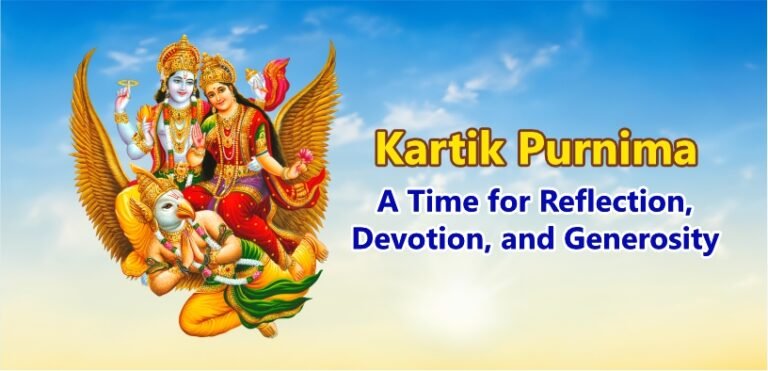
Kartik Purnima, celebrated on November 15, 2024, is one of the most important days in the Hindu calendar. The festival holds great significance as a time for spiritual cleansing, devotion, and charity. This year, it coincides with Dev Diwali and Guru Nanak Jayanti, making it even more special for both Hindus and Sikhs.

Early Morning Rituals
The day begins with early morning rituals. Devotees are encouraged to wake up before dawn and take a holy bath in a sacred river like the Ganga. For those who cannot access a river, adding a few drops of Ganga water to their bath at home is a suitable alternative. After bathing, worshippers offer Arghya, a water offering, to the Sun God, as an act of respect and devotion.

Preparing for the Puja
Before starting the puja, it is important to clean the house and the designated puja area. Idols or images of Lord Vishnu and Goddess Lakshmi are placed on a platform, surrounded by offerings like flowers, fruits, and incense, to create an environment of reverence.

Lighting Lamps (Deep Daan)
Lighting lamps is one of the most cherished rituals on Kartik Purnima. Devotees light ghee lamps and place them at various spots around their homes, including the main entrance and near the Tulsi plant. This act is believed to dispel negativity and invite divine blessings.

Spiritual Practices for Prosperity

Observing the Satyanarayan Vrat
Many devotees observe the Satyanarayan Vrat, a special fast dedicated to Lord Vishnu. Reciting the Satyanarayan Katha is believed to bring peace and prosperity to families, alleviating difficulties and inviting positive change into their lives.

Acts of Charity (Daan)
Kartik Purnima is also a day for charity. It is particularly auspicious to donate food, clothing, and essentials such as sesame seeds, ghee, or flour. This year, the rare Shash Rajyog is believed to amplify the rewards of such charitable acts, making the giving even more spiritually meaningful.

Evening Prayers to the Moon

Offering Arghya to the Moon
At the end of the day, devotees offer Arghya to the Moon God, a ritual believed to bring spiritual fulfillment and inner peace.

Broader Significance of Kartik Purnima

Dev Diwali
Kartik Purnima also marks Dev Diwali, the festival of lights, which celebrates Lord Shiva’s victory over demons. This is observed with the lighting of thousands of lamps along riverbanks, particularly in Varanasi, where the glow of the lamps illuminates the night sky.

Spiritual Cleansing and Liberation
Bathing on Kartik Purnima is considered to cleanse past sins and bring devotees closer to spiritual liberation or moksha.

Guru Nanak Jayanti
The day is also significant for Sikhs as it commemorates the birth anniversary of Guru Nanak Dev Ji, reinforcing the shared spiritual practices between Hindus and Sikhs.

By observing the rituals of Kartik Purnima, devotees seek prosperity, spiritual fulfillment, and the alleviation of personal challenges. It is a day filled with acts of devotion, charity, and gratitude, making it a meaningful occasion for people of all faiths. Kartik Purnima is a reminder of the power of spirituality, compassion, and faith in one’s life.


Suriya’s Kanguva Opens Strong at Box Office Amid Mixed Reviews and Technical Hiccups

0

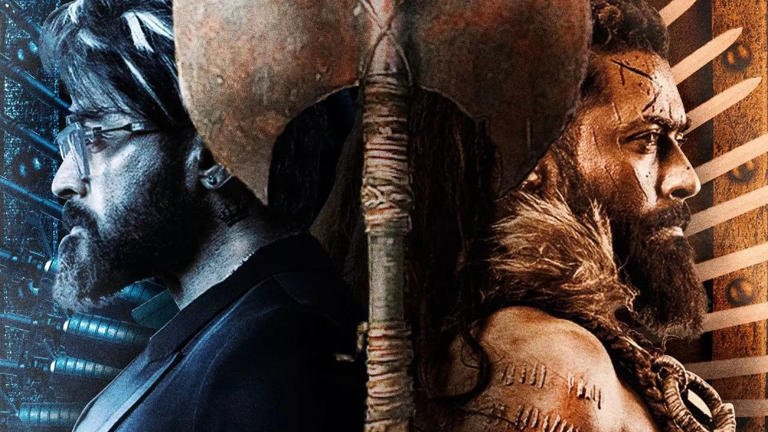
Suriya’s latest cinematic release, Kanguva, has made an impressive mark at the box office, achieving a solid opening despite mixed reviews and a non-holiday release date. The film’s opening day performance highlighted both strong interest and some hurdles, positioning it as one of the top Tamil film debuts this year.

Box Office Highlights

Opening Day Earnings: Kanguva earned around ₹22 crore domestically on its first day, placing it among the top five Tamil openers of 2024, though slightly below early predictions of a potential ₹60 crore global opening.

Worldwide Collection: The film’s global debut totaled approximately ₹40 crore, reflecting a strong response internationally even amidst some challenges.

Occupancy Rates: The movie reported an overall occupancy of 37.25% across Tamil 2D screenings, with better response in Tamil 3D at nearly 49.89%. However, the Hindi version struggled, recording only an 11.47% occupancy rate, raising concerns about its reach in non-Tamil markets.

Mixed Reviews: Critics have offered a range of responses, praising Suriya’s performance but critiquing the film’s loud audio effects and some aspects of the script. This feedback could influence audience retention in the days following the initial release.

Technical Issues: Early morning screenings were delayed due to technical glitches, potentially affecting initial turnout. While quickly resolved, the disruptions may have impacted the film’s early momentum.

Market Expectations: Despite an extensive marketing campaign aimed at Hindi-speaking audiences, Kanguva has seen a slow uptake in that market, creating uncertainty about its longer-term appeal outside of South Indian regions.

With a production budget of approximately ₹350 crore, Kanguva will need sustained box office performance to meet its financial goals. The coming weekend will be a critical test for the film’s staying power, as it seeks to overcome initial mixed feedback and maximize its appeal to audiences across multiple regions.

Nokia to Deploy 3,300 New 4G Sites for Vodafone Idea in Major Network Expansion

0

Nokia has announced a strategic plan to deploy 3,300 new 4G sites for Vodafone Idea (Vi) by March 2025, marking a major expansion in Vi’s network reach and capacity. This initiative is part of a larger $3.6 billion network equipment deal involving Nokia, Ericsson, and Samsung, aimed at enhancing Vi’s service quality and preparing for future technological upgrades.

Key Details of the Network Expansion

New Infrastructure Sites: Nokia will set up nearly 3,300 new 4G sites to boost Vi’s coverage across nine of India’s 17 priority telecom circles, targeting an additional 20 million users.

Site Upgrades and Spectrum Expansion: Alongside new site installations, Nokia will upgrade over 42,000 existing sites and enhance spectrum on more than 25,000 locations. These upgrades are expected to increase Vi’s 4G network capacity by 25%, providing faster and more reliable services to millions of customers.

Progress Update: The project has already achieved 100% of planned spectrum expansions, nearly 40% completion of technology upgrades, and 15% of new site installations, signaling significant early progress.

Focus on Rural Coverage: Nokia’s expansion strategy also includes deploying ultra-lean sites, which will improve connectivity in high-demand urban areas and bring coverage to underserved rural regions where traditional infrastructure is often limited.

Strategic Significance of the Expansion

The collaboration highlights Nokia’s role as a primary partner in modernizing Vi’s infrastructure and setting the stage for future developments like 5G. Tarun Chhabra, Nokia India’s Senior Vice President and Country Head, emphasized that this partnership aims to enrich mobile experiences for Vi’s customers while strengthening Vi’s network for next-generation services.

The extensive upgrades and new infrastructure are expected to improve the overall customer experience for Vi users and better position the company to compete in India’s fast-evolving telecommunications sector.

BSNL Launches India’s First Direct-to-Device Satellite Service, Boosting Connectivity in Remote Regions

0

In a landmark move, Bharat Sanchar Nigam Limited (BSNL) has launched India’s first direct-to-device satellite service, bringing robust connectivity to some of the country’s most remote regions. Announced on November 13, 2024, the initiative is in partnership with U.S.-based Viasat and promises to transform communication access for users in areas with limited or no traditional network coverage.

A New Era in Emergency Communication

BSNL’s satellite service enables vital emergency communications, allowing users to make emergency calls, send SOS alerts, and process UPI payments in locations beyond the reach of cellular and Wi-Fi networks. This feature, essential for isolated communities and in crisis situations, enhances safety and accessibility for those living or traveling in India’s rural or mountainous regions.

How it Works: Viasat’s Satellite Technology

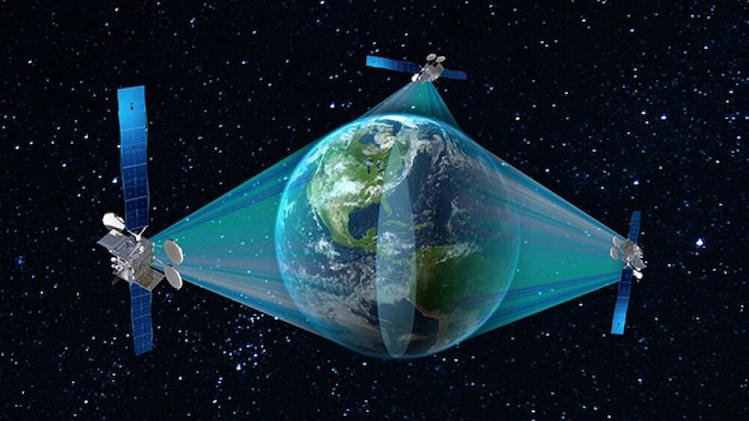
The technology supporting BSNL’s service relies on Viasat’s geostationary L-band satellites, orbiting approximately 36,000 kilometers above the Earth. These satellites enable two-way communication, demonstrated successfully at the India Mobile Congress (IMC) 2024. With this capability, users can send and receive messages, keeping in touch with family, friends, and emergency responders even in the country’s most isolated areas, such as Spiti Valley or distant rural villages.

Bridging the Digital Divide

The Department of Telecommunications (DoT) lauded BSNL’s satellite launch as a groundbreaking step toward bridging India’s digital divide, making satellite connectivity accessible to everyday users. Unlike similar technologies that have been limited to government or military applications, or emergency features like Apple’s SOS service, BSNL’s offering marks the first instance of satellite communication designed for general consumers in India.

Looking Ahead: Service Details to Follow

As of now, BSNL has not released detailed information on how users will access this satellite service. The company has yet to clarify whether the service will be included in existing plans or will require a separate subscription. More details regarding pricing and eligibility are anticipated in the coming weeks.

By launching this satellite service, BSNL places India among a select group of countries offering direct satellite connectivity to regular consumers, underscoring its commitment to expanding network access nationwide.

Could Delhi to San Francisco in 40 Minutes Become Reality? SpaceX’s Starship Brings Hope for Ultra-Fast Travel

0

Imagine boarding a vehicle in Delhi and arriving in San Francisco in just 40 minutes. Once a sci-fi fantasy, this vision is becoming more plausible thanks to rapid advancements in space travel technology, particularly through Elon Musk’s SpaceX and its ambitious Starship program.

Starship’s Role in High-Speed Earth Travel

SpaceX’s Starship, currently under development, is a fully reusable spacecraft designed to carry both crew and cargo on long-duration flights to destinations like Mars. However, one of Starship’s most intriguing potential applications is not just interplanetary—it’s intercontinental. Musk and his team envision Starship enabling ultra-fast Earth-to-Earth travel, which could cut travel times between distant cities to a fraction of today’s.

The Speed Factor

Starship’s speed is key to realizing this concept. Designed to reach velocities over 17,500 miles per hour (28,000 kilometers per hour), the Starship could theoretically complete suborbital flights that dramatically reduce travel times. This would allow passengers to travel between major global cities, such as Delhi and San Francisco, in under an hour.

Promising Test Flights

Recent Starship test flights have shown encouraging progress. These flights, aimed primarily at proving orbital capability, have achieved successful launches and landings. For instance, in a recent test, the Starship was launched and landed in the Indian Ocean approximately 40 minutes after takeoff, offering a tantalizing glimpse into the possibility of future rapid global travel. Though current tests are primarily focused on space missions, they hint at how the technology could one day be adapted for Earth-based travel.

Elon Musk’s Vision for Global Transport

Elon Musk has long advocated for using advanced space travel technology to revolutionize terrestrial transport. While the primary goal for Starship remains space exploration, with missions planned to the Moon and Mars, Musk is confident that the spacecraft’s potential can extend to the way we move on Earth. The plan is to make intercontinental travel not just quicker but potentially more efficient and accessible.

Political Backing and Funding

The future of projects like Starship could be influenced by political developments. Shifts in political leadership, especially in the U.S., have historically impacted funding and regulatory support for space programs. If SpaceX continues to operate in a favorable policy environment, it could accelerate its progress, bringing ultra-fast travel closer to reality.

The Future of Global Travel

While traveling from Delhi to San Francisco in under an hour remains a vision for now, ongoing tests and technological progress suggest it may be achievable. If SpaceX’s development continues at this pace, the dream of ultra-fast global travel could shift from speculative fiction to a tangible reality, reshaping the way we think about distance and travel in the near future.

Living with Diabetes: Celebrity Stories of Resilience, Health Management, and Lifestyle Transformation

0

Diabetes, a condition impacting millions worldwide, is more than just a battle with blood sugar levels—it’s a journey of constant vigilance, lifestyle adjustments, and resilience. For many, it starts with the sudden realization that life, once manageable, now needs a careful balance.

Consider Maheep Kapoor, recently diagnosed with type 1 diabetes. In the face of this challenge, she shifted her focus to meal timing, composition, and regular exercise. Her approach, as she says, is not to let the disease control her life, but to actively manage it. She knows that each day requires awareness of her body’s needs, and a conscious choice to prioritize health.

Nick Jonas, who learned he had type 1 diabetes at age 13, has spent years developing a routine that accommodates his diagnosis. Living with diabetes as a teenager was daunting, but he soon learned the importance of a structured lifestyle—timed meals, regular blood sugar checks, and even planned family time. His journey reminds others that diabetes management is possible, even with a demanding career.

For some, like actor and commentator Gaurav Kapur, the key to control lies in daily habits. Living with diabetes for over a decade, he prioritizes rest, regular exercise, and a balanced diet. Yet one factor he found surprisingly impactful is stress—his blood sugar fluctuates with his stress levels, making emotional well-being as critical as physical health.

For others, the path involves medication and professional guidance. Fawad Khan, diagnosed with type 2 diabetes, manages his condition through regular consultations with a nutritionist and a disciplined approach to diet and exercise. He combines medication with lifestyle changes to keep his insulin sensitivity in check.

Some, like Tom Hanks, have to make hard lifestyle changes to curb the onset of type 2 diabetes. Hanks adjusted his diet and incorporated more physical activity, using his diagnosis as motivation to make healthier choices.

Selena Gomez, facing both lupus and diabetes, highlights the emotional toll of chronic illness. She underscores how intertwined mental and physical health are in managing conditions like diabetes, reminding people that emotional strength is as necessary as physical care.

And then there’s Drew Carey, who found that lifestyle transformation—adopting a healthier diet and increasing physical activity—not only helped him manage diabetes but also brought significant weight loss and overall health improvements.

Diabetes is a complex and challenging illness that goes beyond physical symptoms; it requires a commitment to balance and understanding one’s body. Through their stories, these celebrities illuminate the path to managing diabetes, demonstrating that while it’s a demanding journey, it’s also one that can be managed with resilience and informed choices. They show that diabetes, while formidable, can become a powerful motivation for healthier, more intentional living.

Kanhaiya Kumar Criticizes Amruta Fadnavis, Sparks Controversy Ahead of Maharashtra Elections

0

Congress leader Kanhaiya Kumar ignited controversy at a rally in Nagpur with remarks directed at Amruta Fadnavis, wife of Maharashtra Deputy Chief Minister Devendra Fadnavis. Kumar questioned Fadnavis’s advocacy of “Dharamyudh” (religious war) and implied that it is contradictory for leaders to talk about protecting religion while their family members engage in lighter activities, such as creating Instagram reels. “It can’t be like we save religion and the Deputy Chief Minister’s wife makes reels on Instagram,” Kumar said.

The BJP quickly condemned Kumar’s comments, accusing him of disrespecting Amruta Fadnavis and attempting to shift focus from pressing issues in the state. This exchange underscores the escalating tensions and sharp rhetoric between political rivals as Maharashtra prepares for its upcoming assembly elections.

Amit Shah Rules Out Restoration of Article 370, Criticizes Muslim Reservations and Opposition Alliance in Maharashtra Rally

0

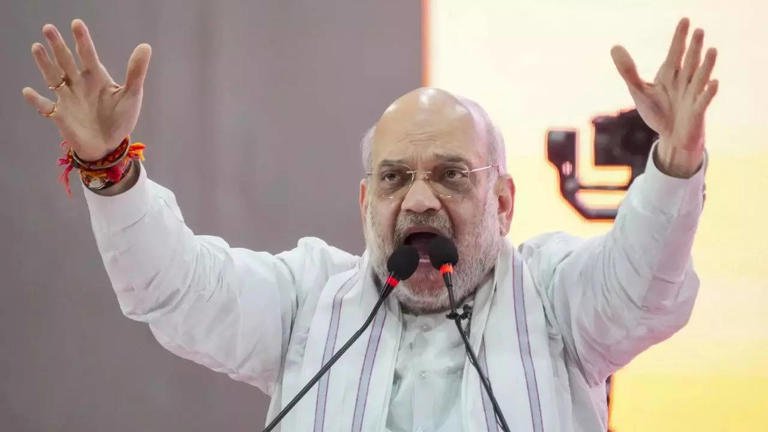
Union Home Minister Amit Shah made a decisive statement at a rally in Maharashtra on November 13, 2024, reaffirming that Article 370—which previously granted special status to Jammu and Kashmir—will never be reinstated. Shah’s comment, asserting that the provision would remain defunct “even if former Prime Minister Indira Gandhi were to return from heaven,” underscores the BJP’s unwavering stance on the abrogation of Article 370, which the Modi government revoked in 2019.

Shah also tackled the issue of Muslim reservations in jobs and education, pointedly addressing Congress leader Rahul Gandhi. He remarked that “even if Gandhi’s fourth generation comes into power,” the BJP would not support reserving SC, ST, and OBC seats for Muslims, as it would reduce the existing quotas for these communities—a measure he firmly opposes.

The remarks came as part of the BJP’s campaign ahead of the Maharashtra Assembly elections. Shah criticized the opposition coalition, the Maha Vikas Aghadi (MVA), calling it an “Aurangzeb fan club” and accusing its leaders of compromising on core principles for political advantage. He expressed confidence in a decisive BJP-led alliance victory in the upcoming elections, projecting his party as the only one standing firm on issues of national unity and reservation policy.

Tulsi Gabbard Appointed as Director of National Intelligence, Marking Historic First for Hindu American Representation

0

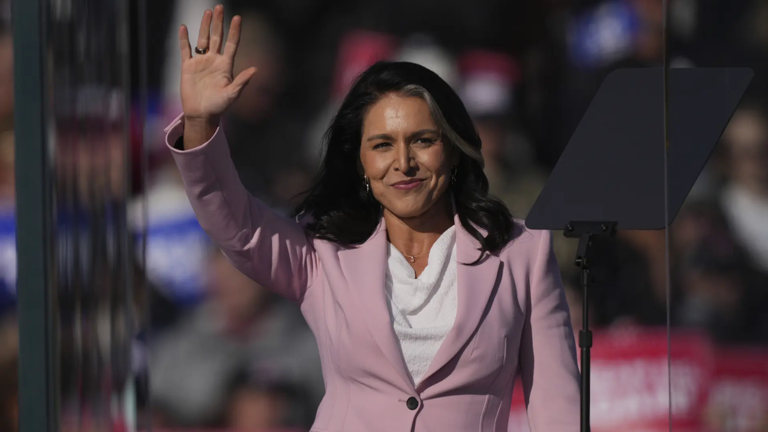
November 14, 2024 – Tulsi Gabbard, a prominent American politician and military veteran, has been appointed by President-elect Donald Trump as the Director of National Intelligence (DNI). This position places her at the head of the U.S. intelligence community, overseeing 18 agencies and serving as the president’s principal advisor on intelligence matters. Gabbard’s appointment is historic, making her the first Hindu American to hold this influential role.

Born on April 12, 1981, in American Samoa and raised in Hawaii, Gabbard has a diverse background with a Samoan father and a mother of European descent who converted to Hinduism. Her upbringing immersed her in Hindu teachings, and her identification with Hinduism has been a notable aspect of her public life, including her decision to take her oath of office on the Bhagavad Gita when first elected to Congress.

Political Career

Gabbard launched her political career at just 21, serving in Hawaii’s House of Representatives before becoming the U.S. Congresswoman for Hawaii’s 2nd district from 2013 to 2021. She was the first Hindu and the first American Samoan to be elected to the U.S. Congress. Known for her strong views on foreign policy, she has been a vocal critic of U.S. military interventions overseas.

In 2020, Gabbard ran for the Democratic presidential nomination but ultimately endorsed Joe Biden after suspending her campaign. By 2022, she announced her departure from the Democratic Party, citing ideological shifts within the party, and soon aligned with the Republicans, endorsing Trump in subsequent political races.

Gabbard’s military background includes more than two decades with the Army National Guard. She served in Iraq and Kuwait, earning a Combat Medical Badge for her work in combat zones. Her military experience has deeply influenced her views on U.S. foreign policy and national defense.

Trump announced Gabbard’s appointment on November 14, commending her “fearless spirit” and bipartisan appeal. Although Gabbard lacks direct experience in intelligence, her military service and distinctive political journey have led to her selection. Gabbard has expressed gratitude for the appointment, highlighting her dedication to strengthening national security under Trump’s administration.

Gabbard’s role as DNI not only underscores her individual achievements but also reflects the evolving dynamics within American politics, especially in terms of party affiliations and foreign policy approaches.

The Race for Jharkhand: Voters Head to Polls in First Phase of Assembly Elections

0

Jharkhand came alive with energy as the first phase of the 2024 Assembly elections kicked off, with voters in 43 constituencies casting their ballots. Early on, lines formed outside polling stations, marking the start of a critical election season that could reshape the state’s political future.

By 11 AM, voter enthusiasm was palpable, with a turnout already surpassing 29%. Polling began promptly at 7 AM and will continue until 5 PM for most booths. At the 950 sensitive polling locations, however, voting will close an hour earlier, with those in line by the cutoff still guaranteed the chance to vote.

For many in the state, the stakes feel particularly high. A total of 683 candidates are competing in this phase, and among them are some of Jharkhand’s most prominent political figures, including former Chief Minister Champai Soren. The race spans a diverse array of constituencies, covering both general and reserved seats for Scheduled Castes and Scheduled Tribes.

Ensuring a smooth and safe voting process has been a priority. With over 200 companies of security forces stationed across the state, and additional protocols in place for sensitive polling sites, authorities are leaving no room for disruption.

On the political front, this election is vital for key parties, especially the BJP, Congress, and the ruling Jharkhand Mukti Morcha (JMM). The JMM, which leads a coalition government, has been campaigning with promises aimed at securing a broader support base. These include pledges for job reservations for women and new welfare schemes. It’s clear that parties are keenly aware of the shifting voter sentiments and are vying to capture the trust of the people.

Looking ahead, the second phase of voting is set for November 20, with the final outcome to be announced on November 23. Until then, Jharkhand will be on the edge, watching each phase unfold as the battle for control continues.